
Let’s be real.
Most creators think they are being incredibly slick when they use ChatGPT to churn out their weekly content. They assume that a handful of custom GPT instructions or a few clever, multi-step prompts will successfully hide the digital fingerprints from their audience.
But here is the reality: readers are getting much smarter. They can smell the underlying code from a mile away, whether you are publishing deep dives on Substack or quick takes on Medium.
If you actually want to thrive in 2026, you must stop sounding like a predictive text machine and start sounding like a human with a pulse. It is not just about fixing repetitive punctuation or removing “delve.” It is about eliminating that specific pattern of meaningless prose and fake profundity that signals “AI-generated” to every savvy reader.
The Trap of Contrasting Rhetorical Framing
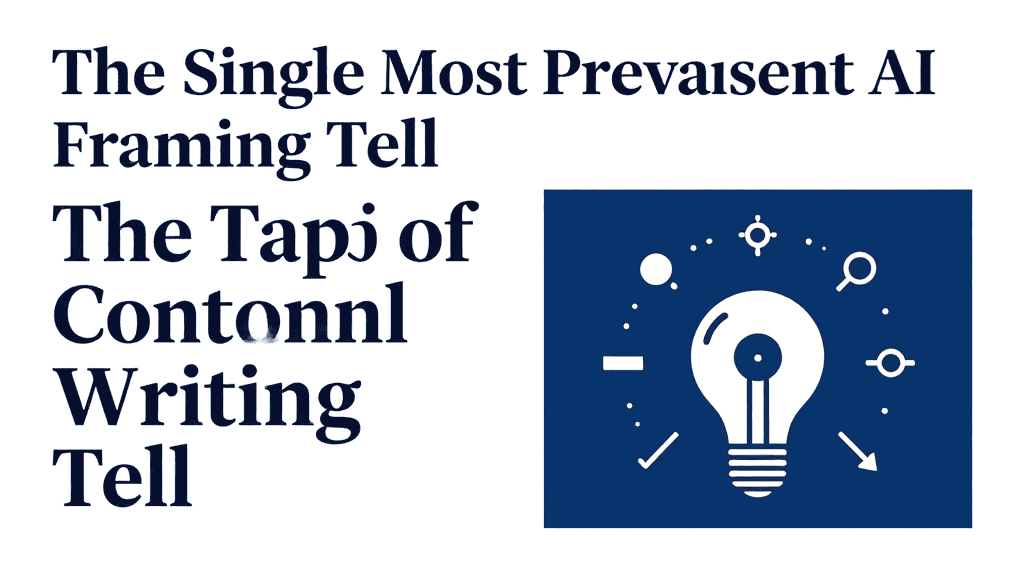
One of the most pervasive AI writing tells is a technique known as contrastive rhetorical framing. This linguistic habit has become a staple of LLM patterns, serving as a primary mechanism for generating artificial gravitas.
You have likely encountered it: “The company isn’t just selling software; they are selling a vision for the future.” While this structure sounds profound, it is often intellectually hollow. It relies on a binary comparison to manufacture importance where none exists.
Industry experts like Jejomar Contawe have highlighted how this framing creates a false sense of insight. It attempts to elevate a mundane observation into a world-changing revelation. When you encounter this specific rhythmic cadence, it is a clear signal of automated logic, a classic hallmark of the synthetic prose produced by modern large language models.
Stop Using Rhetorical Questions as Crutches
What changed? The math did. This is the hallmark of the robotic ChatGPT writing style that currently saturates the web. Many AI prompters mistakenly believe that starting a paragraph with a short, rhetorical question followed by a punchy, three-word answer creates immediate impact. It is designed to feel dramatic and authoritative, yet it often falls flat.
In reality, this predictable pattern signals a profound lack of human nuance and creative rhythm. If you rely on these linguistic shortcuts too frequently, your audience will tune out faster than a broken Alexa. Masterful writers at prestigious publications like The New Yorker or The New York Times do not lean on such formulaic, cheap tricks. Instead, they build engagement through authentic voice, varied sentence structures, and genuine narrative depth that AI cannot yet replicate.
The Problem with Excessive Punctuation
Let’s talk about the notorious ChatGPT hyphen. Generative AI content tends to favor em-dashes over standard commas for no discernable reason at all, creating a fragmented reading experience. This specific punctuation tic is a hallmark of machine-generated text.
You will frequently see sentences structured like this: Amazon can now feed Times articles, plus content from NYT Cooking, directly into Alexa. AI inserts this extra punctuation to mimic human complexity, yet it often feels forced. Even when drafting high-level policy briefs for publications like Foreign Affairs, these unnecessary dashes stand out as artificial and robotic.
If you want to bypass modern AI detection, you must audit your punctuation. Stop letting the machine dictate your rhythm; instead, favor natural pauses that reflect authentic human thought and flow.
The Illusion of Triplet Framing and Alliteration
AI output possesses an obsessive fixation with triplets. By default, the machine frames every argument into balanced sets of three, promising results that are fast, efficient, and scalable. This structural crutch is engineered to project an air of authority, yet it frequently results in shallow, predictable prose. It is the unmistakable digital fingerprint of automated writing.
Whether you are leveraging the research capabilities of Perplexity AI or the conversational edge of Grok, the underlying logic remains the same: the algorithm prioritizes symmetry over substance. This pursuit of rhythmic perfection ultimately feels sterile. True creative genius, from the prose of William Shakespeare to modern thought leadership, thrives on the unexpected and the asymmetrical. If you want to build a resonant brand, you must abandon these repetitive patterns and embrace a more human, irregular cadence.
The Fake Profundity of the Inspirational Pivot
This isn’t just about AI; it’s about the very essence of humanity. This is what we call the “inspirational pivot statement,” a hallmark of synthetic prose. AI writing frequently utilizes these abstract shifts to artificially boost drama, attempting to transform a technical tutorial or listicle into a TED-talk style manifesto. For example, a simple guide on spreadsheet automation might suddenly claim to be “redefining the future of human potential.”
Modern readers immediately see through this fake profundity. It feels like an overproduced commercial for Google or a generic corporate memo generated by Resume Genius. If you want your content to succeed, stay grounded in reality. Avoid pivoting to the meaning of life when your primary goal is simply to explain the mechanics of digital marketing or software integration.
Universal Authority Without Real Sources
Studies frequently claim that storytelling is 22 times more memorable than raw facts. You have likely encountered that specific statistic a thousand times in marketing blogs, right?
The core problem is that generative AI often presents these sweeping statements without providing any actual attribution or primary source. In doing so, it effectively launders popular opinion into supposed objective fact. When you publish content on high-tier platforms like Rolling Stone or The Athletic, sophisticated readers expect “receipts”, hyperlinks to peer-reviewed data or direct quotes from experts. AI, however, rarely provides them.
Instead, these models project a sense of universal authority that is entirely unearned. This lack of transparency is the direct opposite of digital authenticity, eroding the trust required to build a genuine connection with your audience.
Quotes Without Attribution and Fabricated Facts
AI-generated texts frequently include fabricated quotes or misattributed aphorisms. For instance, a model might claim “AI is the new electricity” and confidently attribute it to Elon Musk, despite Andrew Ng being the actual source. These inaccuracies occur because LLMs prioritize linguistic patterns over factual databases.
While some citations may be technically real, AI often hallucinates the surrounding context or the specific event where the words were spoken. For any serious editor, these phantom references represent a massive red flag regarding the content’s integrity.
Relying on unverified chatbot outputs is like building a house of cards; one rigorous fact-check can collapse your entire reputation. Always verify every syllable. Never assume the machine got the quote right, even if the phrasing perfectly matches a tech titan’s established persona.
Generic Phrases and the Death of Originality
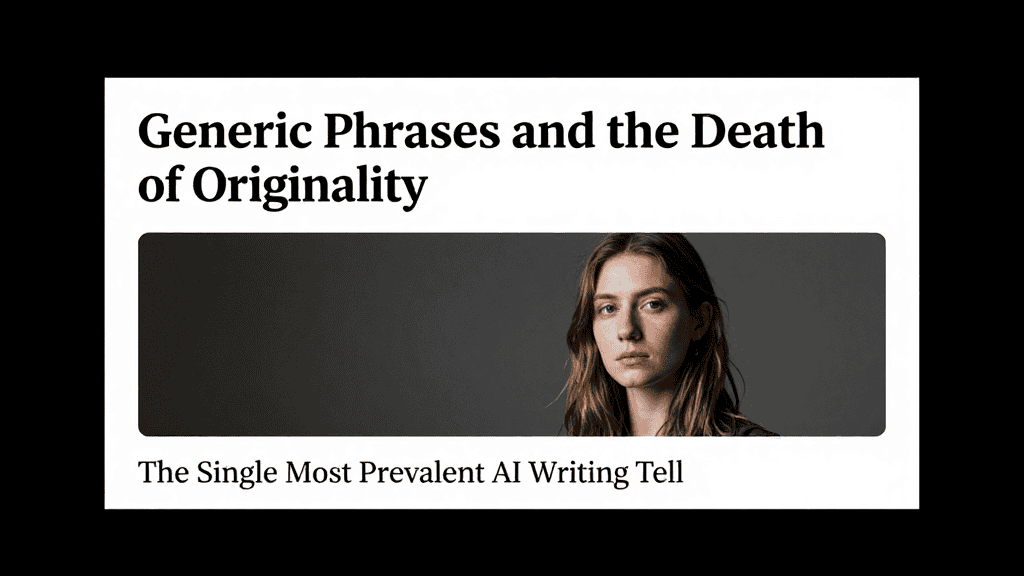
It’s important to note that everyone wants to succeed. These are the exact types of generic phrases and recycled clichés that act as a death sentence for your digital content. Because AI models operate on mathematical predictability, they naturally default to the most overused, low-effort strings of words found in the English language.
If your prose sounds like a corporate template, your audience will treat it as one, by ignoring it. In an era where you are competing against billions of AI-generated pages, being “good enough” is no longer a viable strategy. You must break the predictable patterns that algorithms love. Infusing your writing with a distinct, human voice and specific personal anecdotes is the only way to remain relevant and survive the massive AI content wave approaching in 2026.
The False Authority of Rhetorical Questions
Have you noticed how the ChatGPT writing style constantly tries to lead you by the nose? It has developed a predictable, rhythmic tic: starting a complex thought with a generic rhetorical question, immediately followed by a punchy, one-sentence resolution.
What changed? The underlying math did.
Why does this matter? Because your brand’s credibility depends on it.
This is a classic LLM writing pattern that identifies content as synthetic. Real humans, from visionary tech leaders like Sam Altman to the long-form sports journalists at The Athletic, simply don’t communicate with this repetitive cadence in every paragraph. It is a lazy, mechanical way to transition between ideas that screams automated generation. If you want true freedom from the AI label, stop asking hollow questions you already plan to answer two seconds later.
The Excessive Use of Dashes
This is a subtle AI content giveaway that most people miss.
AI generated text has a weird obsession with dashes. It uses them to cram extra information into a sentence where a comma or a period would work better.
You might see something like: Amazon can now feed Times articles (plus content from NYT Cooking) directly into Alexa.
There is no clear reason for the punctuation choice. It is just a textual pattern that Perplexity AI and ChatGPT default to when they want to sound sophisticated.
It breaks the flow. It makes your digital marketing copy look like it was assembled by a machine rather than written by a person.
No more hiding behind excessive punctuation. Stick to natural sentence structures.
The Problem with Rhetorical Questions
AI prompters rely on rhetorical questions because LLMs mistake them for conversational warmth. It is a hollow attempt to mimic human connection that fails because real people do not write like 2005 high school essays. ChatGPT constantly sets itself up with a pitch just to hit its own home run.
You have seen the pattern: “What changed? The math did.” This crutch exists because AI lacks the nuance for genuine narrative flow. It uses these theatrical transitions to bridge ideas it cannot actually comprehend.
To succeed on Substack or Medium, you must kill this habit. A writer with authority simply states: “The math changed.” They do not need the performative buildup. This “ask and answer” pattern is a massive giveaway that screams “automated writing” to any discerning reader.
The ChatGPT Hyphen: A Punctuation Obsession
Spotting AI text often starts with punctuation. While amateur prompters aim for sophistication, they frequently leave a “digital fingerprint” through repetitive, unnatural syntax. Critics like Jejomar Contawe highlight the “ChatGPT hyphen” as a primary offender, a classic LLM pattern that disrupts natural reading flow.
AI favors dashes and colons over simple commas to manufacture unearned drama. While professional journalists use punctuation to master rhythm, AI uses it to mask a lack of structural restraint. Compare these styles:
- Human: Amazon feeds Times articles and NYT Cooking content directly into Alexa.
- AI: Amazon feeds Times articles, plus content from NYT Cooking: directly into Alexa.
The AI version forces awkward pauses where none belong. These “colon clusters” and dash-heavy sentences signal a machine trying too hard to sound authoritative.
The False Authority of Triplet Framing
AI loves the number three.
It uses a pattern called Triplet Framing to make a point sound more official than it actually is. If you actually want to succeed in identifying AI writing, you have to look for this specific rhythm.
Think of phrases like: Fast, cheap, and out of control. It sounds punchy, right? But it is often just meaningless prose designed to mimic the authoritative style of a professional writer at The New Yorker or Foreign Affairs.
Let’s be real. Real life is messy. It rarely fits into neat little triplets. When you see three adjectives or three verbs lined up in perfect alliteration, you are likely looking at a digital fingerprint from ChatGPT or Perplexity AI.
The Inspirational Pivot Statement
This is the “fake deep” moment common to nearly every AI-generated article. The text cruises along predictably, then suddenly shifts gears into a grand philosophical statement. It is a classic LLM writing pattern designed to mimic a high-budget TED Talk, aiming to manufacture a sense of unearned gravitas.
You have seen it before. The AI writes about a mundane technical topic, like data processing, and then hits you with: “This isn’t just about software; it is about the very fabric of human connection.” It is an attempt at faux profundity that a tech visionary might use during a keynote to inspire investors. However, when a bot executes this maneuver, it feels hollow and unearned, exposing the machine’s inability to distinguish between genuine insight and a purely stylistic flourish.
Human Authority vs. AI Generated Text
Many AI prompters believe their custom instructions make content indistinguishable from professional journalism. They are mistaken; LLMs leave distinct digital fingerprints that readers subconsciously detect.
| Feature | Human Writing | AI Patterns |
|---|---|---|
| Structure | Rhythmic and unpredictable. | Repetitive and robotic. |
| Punctuation | Natural flow. | Excessive dashes/colons. |
| Insights | Personal experience. | Contrastive framing. |
| Attribution | Specific sources. | Universal authority. |
The Contrastive Framing Trap
AI mimics depth using “not just X, but Y” structures. For example: “It’s not just a tool; it’s a revolution.” This creates a veneer of insight without offering substance.
Predictable Interrogation
LLMs frequently use a “Question-Punchy Answer” combo to mimic a TED-talk style. “Why now? Because the data changed.” This forced drama is a classic AI tell.
Laundered Authority
AI often cites “studies” or statistics, like “storytelling is 22x more effective”, without providing verifiable sources, transforming common internet myths into authoritative facts.
Frequently Asked Questions
What is the most common AI writing tell?
The primary giveaway is Contrastive Rhetorical Framing. LLMs simulate depth by claiming a subject is “not just X, but Y.” This creates a hollow, TED-talk-style profundity, like asserting a brand is “not just selling products, but selling dreams”, that lacks genuine analytical substance.
Can AI detectors find all AI content?
Detectors are often unreliable against sophisticated prompts. Instead, watch for the “Inspirational Pivot,” where the AI shifts from dry facts to forced emotional weight, such as concluding a technical guide with a generic reflection on the “future of humanity.”
How do I make my writing sound less like AI?
Humanize your copy with specific sensory details and first-person narratives that AI cannot replicate. Eliminate repetitive “Triplet Framing” and alliteration, replacing synthetic transitions with unique personal anecdotes and grounded evidence.