
Still think pCloud is the king of cloud storage?
That’s adorable. While you’ve been comfortably settled, a whole new league of competitors has emerged, ready to expose the cracks in pCloud’s armor.
If you’re serious about secure cloud storage and effective file sharing, it’s time to stop settling.
This isn’t just about finding a pCloud alternative; it’s about ditching an outdated approach and seizing a solution that actually meets modern demands for security, speed, and functionality.
Let’s get to it.
Key Highlights
Are you still clinging to pCloud like it’s the only option? Wake up. The cloud storage world has moved on, and you’re being left in the dust. This isn’t just an update; it’s a revolution.
- Discover pCloud alternatives that offer superior, zero-knowledge encryption without the bullshit extra fees.
- Find services with massive free storage tiers that make pCloud’s offering look pathetic.
- Uncover collaboration tools that actually work, instead of making you want to throw your laptop out the window.
- Learn which providers deliver lightning-fast file transfer speeds that leave pCloud choking on their dust.
- Explore options with lifetime plans that provide genuine value, not just a one-time payment for mediocre service.
- Get the lowdown on business plans that empower your team, not just empty your wallet.
10 pCloud Alternatives That Will Blow Up Your Storage Expectations
So you’re finally ready to admit your current cloud storage provider might be a dinosaur. Good. Sticking with the familiar is a surefire way to get laughed out of the room by your competition. The best pCloud alternatives aren’t just slightly better; they’re in a completely different league.
These cloud storage providers deliver on the promises pCloud only whispers about. We’re talking ironclad secure storage, generous storage space, and file management that doesn’t feel like a chore. From robust business plans to a free plan that’s actually useful, it’s time to see what you’ve been missing.
1. Sync.com – The Encryption Maniac That Puts pCloud to Shame
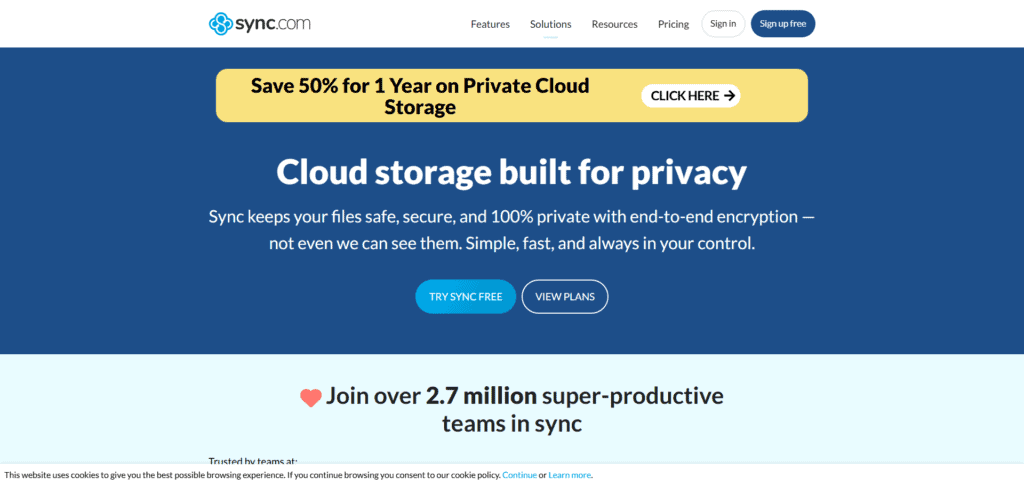
Are you really okay with pCloud charging you extra for real privacy? Sync.com thinks that’s bullshit. This pCloud alternative bakes zero-knowledge, secure cloud storage into every plan, meaning not even Sync.com can peek at your files. Your privacy isn’t an upsell; it’s the standard.
While pCloud makes you pay for its “Crypto” add-on, Sync.com provides end-to-end encryption from the get-go. It’s a clear message: your data’s security is non-negotiable. For anyone who thinks privacy features should be included, not tacked on, Sync.com is the wake-up call you need.
- Zero-Knowledge Encryption: Standard on all plans, unlike pCloud’s paid add-on.
- Generous File History: Offers up to 365-day file versioning, protecting you from accidental deletions.
- Collaboration Ready: Integrates with MS Office 365 to boost productivity.
2. Icedrive – Freezing Out the Competition With Zero-Knowledge Security
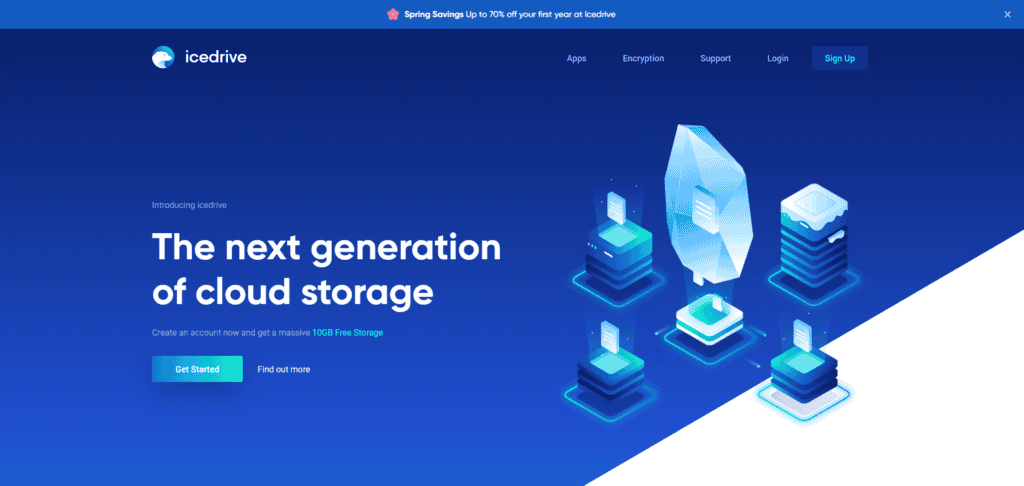
Icedrive enters the ring with a proposition that should make you question your loyalty to pCloud: a clean interface paired with zero-knowledge security. While it uses Twofish encryption instead of the more common AES-256, it still offers a dedicated encrypted folder where your files are locked down tight.
The service provides a generous 10 GB of free cloud storage, though the zero-knowledge feature is reserved for paid plans. Still, for those seeking affordable and secure storage that respects privacy laws, Icedrive presents a compelling case. It’s a sleek, modern alternative that doesn’t complicate things.
- Encrypted Folder: Paid plans feature a specific folder with zero-knowledge, client-side encryption.
- Virtual Drive: Mount your cloud storage as a local drive for seamless file access.
- Affordable Tiers: Offers competitive pricing on its paid plans, including lifetime options.
3. MEGA – 20GB of Free Storage with Privacy So Tight It Squeaks
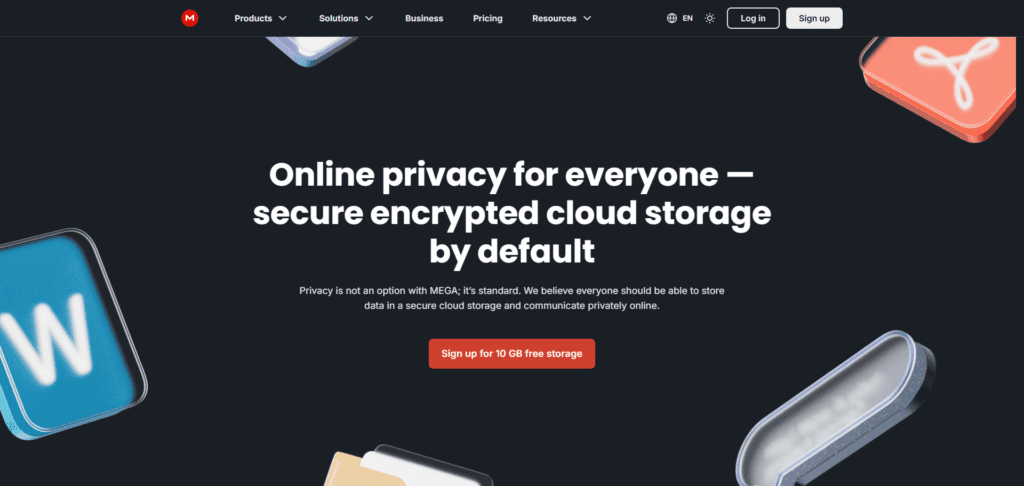
If pCloud’s 10 GB free plan felt generous, MEGA is here to laugh in its face with a whopping 20 GB. This service made its name by prioritizing privacy with end-to-end encryption on everything. It’s a solid pCloud alternative for anyone who needs to send large files without jumping through hoops.
MEGA’s platform is built for fast file transfer and straightforward file sharing. While its founder has since distanced himself from the company and security flaws were identified in 2022, it remains a popular choice for users who demand a massive amount of free storage and default encryption.
- Massive Free Storage: Starts you off with 20 GB, double what pCloud offers.
- End-to-End Encryption: All files, chats, and calls are encrypted by default.
- Cross-Platform Sync: Available on Windows, Mac, Linux, Android, and iOS.
4. Tresorit – Swiss Fort Knox for Collaboration Addicts
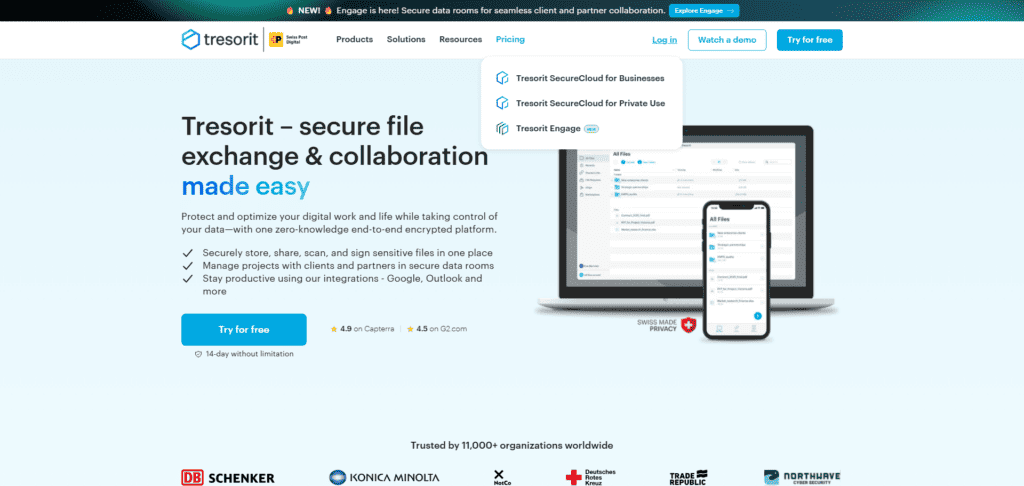
Think your business data is secure with pCloud? Think again. Tresorit is the Swiss-engineered fortress built for teams that can’t afford a single data leak. This is a business-first platform where zero-knowledge encryption isn’t a feature—it’s the foundation. Every file is protected by encryption keys that only you control.
Tresorit is designed for serious business collaboration. It offers secure data rooms, e-signature workflows, and Outlook integration that annihilates the security risks of standard email attachments. If you’re handling sensitive client information, using anything less is like playing Russian roulette with your company’s reputation.
- Zero-Knowledge on All Plans: Unlike pCloud, true privacy is never an add-on.
- Compliance-Focused: HIPAA compliant and ISO 27001 certified, ideal for legal and healthcare.
- Advanced Collaboration Tools: Securely share and manage documents with granular controls.
5. Proton Drive – The Encryption Purist’s Dream
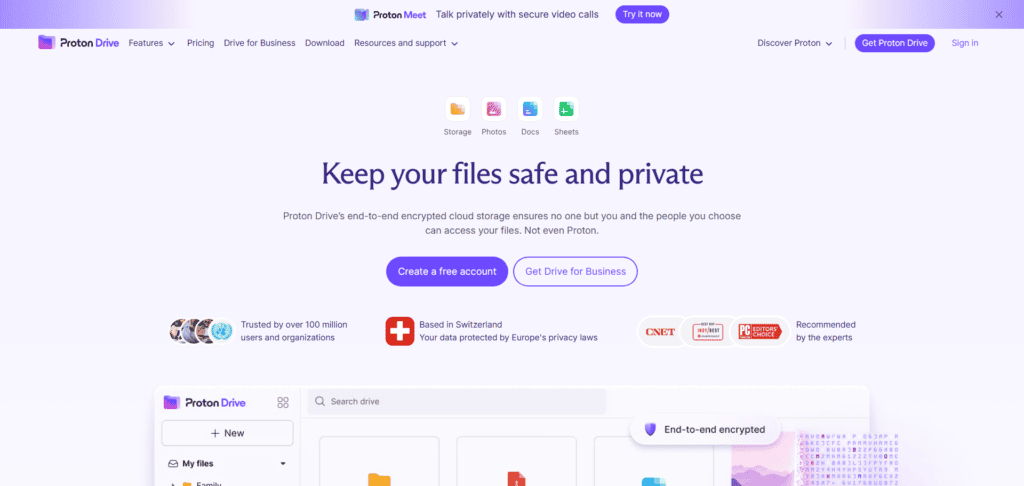
From the same minds that brought you ProtonMail, Proton Drive is a no-compromise solution for privacy purists. Like its email counterpart, it offers end-to-end encryption as an unbreakable standard. Your file storage is secured before it even leaves your device, making it unreadable to anyone but you.
This service is a direct challenge to pCloud’s half-hearted approach to privacy. Proton Drive doesn’t just offer secure cloud storage; it embodies a philosophy where user privacy is paramount. There are no backdoors and no excuses. It’s simple, secure, and built by a team with a proven track record in digital security.
- Swiss Privacy: Headquartered in Switzerland, benefiting from strong privacy laws.
- End-to-End Encryption: All files are encrypted by default, no exceptions.
- Open Source: Its open-source nature allows for public scrutiny and verification.
6. Dropbox – Old Dog, New Tricks (And Still Faster Than pCloud)
Yeah, yeah, Dropbox. You think you know it. But while you were getting cozy with pCloud, Dropbox has been honing its speed and collaboration tools to a razor’s edge. In head-to-head tests, Dropbox matches or beats pCloud’s transfer speeds, making it a beast for syncing and sending large files.
Sure, it lacks the zero-knowledge encryption of other cloud storage services on this list, and its 2012 security breach is a permanent stain. But for pure performance and seamless file management, Dropbox is still a titan. It’s a reminder that sometimes the old dog has the sharpest bite.
- Blazing Speeds: One of the fastest cloud storage services for uploads and downloads.
- App Integrations: An extensive App Center with tools like Google Workspace and Office 365.
- Robust File Versioning: Easily recover previous versions of your files.
7. Google Drive – Sharing, Syncing, and a Side of AI
Let’s be blunt: if you live in the Google ecosystem, using anything else for collaboration is like trying to text on a typewriter. Google Drive is the undisputed champion of real-time teamwork. The ability to have multiple people edit documents simultaneously is something pCloud can only dream of.
With a generous 15 GB free tier shared across Google Workspace apps, it blows pCloud’s initial offering out of the water. While it doesn’t offer zero-knowledge encryption (Google holds the keys), its file sharing and productivity features are second to none. This is one of the best alternatives to pCloud if your priority is getting work done, not hiding it.
- Seamless Collaboration: Unmatched real-time editing of Google Docs, Sheets, and Slides.
- Generous Free Tier: 15 GB of free storage is a damn good starting point.
- AI Integration: Higher-tier plans include Gemini AI to supercharge your workflow.
8. OneDrive – Office Integration That’ll Make You Blush
If your work life revolves around Microsoft Office, using pCloud is just self-sabotage. Microsoft OneDrive offers an integration so deep and seamless it feels like magic. You can create, edit, and collaborate on Word, Excel, and PowerPoint files directly in the cloud without missing a beat.
OneDrive’s business plans are built to empower teams, offering robust security features and a user-friendly mobile app. While it lacks zero-knowledge encryption by default, its Personal Vault feature adds an extra layer of identity verification for your most sensitive files, providing a taste of the secure cloud storage you’ve been missing.
- Unbeatable Office Integration: The best choice for users heavily invested in the Microsoft ecosystem.
- Personal Vault: A protected area for your sensitive files requiring strong authentication.
- Solid Business Plans: Offers comprehensive tools for team collaboration and management.
9. Box – The Business Collab Juggernaut
Stop thinking about personal storage. Box isn’t playing that game. This is a cloud storage solution forged in the fires of enterprise-level demands. It’s a content management beast designed for large teams that need strict compliance, workflow automation, and collaboration tools that scale.
While pCloud dabbles in business features, Box lives and breathes them. It’s HIPAA compliant and ISO 27001 certified, with an optional add-on, Box KeySafe, that moves it closer to zero-knowledge by letting you manage your own encryption keys. For any business tired of pCloud’s limited user privacy controls, Box is the real deal.
- Enterprise-Grade Security: Built for businesses with strict compliance and security needs.
- Workflow Automation: Streamline business processes directly within the platform.
- Customer-Managed Keys: The KeySafe add-on offers a higher level of data control.
10. Internxt – Privacy Zealots, This One’s for You
If you believe privacy is a right, not a feature, then Internxt is your new home. This open-source pCloud alternative is built on a foundation of absolute privacy, with client-side, zero-knowledge encryption as its default setting. Internxt couldn’t look at your data if it wanted to, and its architecture has been independently verified.
Based in Spain and aligned with Europe’s tough privacy laws, Internxt offers military-grade AES-256 encryption and is the only service on this list with post-quantum encryption deployed by default. For anyone serious about data protection, choosing pCloud over Internxt is an act of willful ignorance.
- Verified Zero-Knowledge: Independently audited to confirm its privacy claims.
- Open Source: Code is available on GitHub for complete transparency.
- Post-Quantum Ready: The only provider on this list prepared for future encryption threats.
How These pCloud Alternatives Obliterate Your Storage Pain
Are you tired of your cloud storage feeling like a compromise? Good. It’s time to demand more than just a digital locker for your files. The best cloud storage options don’t just store your data; they empower you with tools that make your life easier and your files safer.
These pCloud alternatives tackle the biggest pain points head-on. From encryption that actually protects you to collaboration tools that don’t suck, they offer a level of functionality that makes pCloud look like a relic. We’re talking superior file syncing, password protection that means business, and realistic storage space for your needs.
Encryption That Actually Means Something
Let’s cut the crap. Most “secure” cloud storage is a joke. If the provider holds the encryption keys, your data is one subpoena or rogue employee away from being exposed. pCloud’s solution? Charge you extra for pCloud Crypto, their version of real privacy. That’s not security; it’s an insult.
True data security comes from zero-knowledge encryption, where your files are encrypted on your device before they’re ever uploaded. Providers like Sync.com, Tresorit, and Internxt build this in as standard. They can’t access your file storage even if they wanted to.
This is the fundamental difference between marketing fluff and actual password protection. When a provider can’t read your files, they have nothing to hand over to authorities and nothing for hackers to steal. It’s encryption that actually means something, not just a checkbox on a feature list.
Collaboration Tools That Won’t Make You Cry
Trying to collaborate effectively using pCloud feels like a cruel joke. Its tools are basic, clunky, and fall embarrassingly short of what modern teams need. If you’re trying to edit documents with colleagues, you’re better off sending files back and forth over email like it’s 2005.
Now, look at the alternatives. Google Drive and OneDrive are built around their respective office suites, offering seamless, real-time collaboration that just works. You can have multiple people edit documents simultaneously without creating a dozen different versions. Dropbox and Box take it even further with deep third-party app integrations, turning your cloud storage into a productivity hub.
These services understand that file sharing is just the beginning. Their business plans offer advanced features, from managing team permissions to integrating with Google Workspace apps, that make teamwork efficient instead of infuriating.
File Transfer Speeds That’ll Leave You Breathless
Is there anything more soul-crushing than watching a progress bar crawl across the screen when you’re trying to upload large files? Slow file transfer speeds are a productivity killer, and frankly, pCloud isn’t always the speed demon it claims to be. Some users report decent performance, but it can be inconsistent, especially with large file sizes.
Then you have giants like Dropbox and Google Drive, which have invested billions into their infrastructure to deliver blazing-fast upload and download speeds. In performance tests, they consistently prove their ability to handle massive files without breaking a sweat. Fast file syncing means your files are where you need them, when you need them, without the damn waiting.
Speed isn’t a luxury; it’s a necessity. For anyone dealing with video, high-resolution images, or large project backups, choosing a provider with a proven track record for fast performance is a no-brainer. Don’t let sluggish transfers dictate your workflow.
Privacy, Security, and End-to-End Encryption Showdown
Let’s get one thing straight: not all encryption is created equal. Most cloud providers use server-side encryption, which is like giving your house key to the landlord. Sure, it keeps strangers out, but the owner can still walk in whenever they want. This is a massive loophole that leaves your data vulnerable to unauthorized access.
True data protection comes from end-to-end encryption, where you—and only you—hold the key. This section will rip apart the marketing claims and show you which services offer genuine security features and which are just selling you a false sense of safety.
End-to-End Encryption: Who’s Full of Crap and Who’s Legit?
Most cloud storage providers are full of it when they talk about privacy. They use phrases like “bank-grade security” while holding the encryption keys themselves. That’s not end-to-end encryption; it’s a marketing lie. If they can access your data, it’s not truly private.
The legit players—Sync.com, Internxt, Tresorit—use zero-knowledge, end-to-end encryption. This means your files are scrambled on your device before they’re uploaded, and only you have the keys to unscramble them. This architecture ensures absolute user privacy and prevents unauthorized access from anyone, including the provider. pCloud only offers this as a paid add-on, which is a giant red flag.
- Legit E2EE Providers: Internxt, Sync.com, and Tresorit offer true zero-knowledge encryption by default.
- The Compromised: Google Drive, Dropbox, and OneDrive hold your encryption keys.
- The Upsell: pCloud makes you pay extra for real privacy with its Crypto add-on.
Data Centers: Fortresses or Cardboard Boxes?
Where your data lives matters almost as much as how it’s encrypted. A provider’s data centers are the physical line of defense against break-ins and disasters. But more importantly, their location determines which government’s laws apply. Storing your data in a country with weak privacy laws is like building a vault in the middle of a public square.
Providers like pCloud and Tresorit, with their Swiss connections, leverage the country’s strong privacy laws as a selling point. Similarly, European-based services like Internxt (Spain) and Filen (Germany) are governed by GDPR, one of the world’s strictest data protection regulations. This legal framework provides a crucial layer of security that services based elsewhere might not offer.
- Swiss Privacy: Tresorit and pCloud benefit from Switzerland’s robust privacy regulations.
- GDPR Protection: Internxt and Filen operate under strict European data protection laws.
- Physical Security: Reputable providers use multi-layered security at data centers, including biometric access and 24/7 monitoring.
Free Storage, Cheap Upgrades, and No-BS Pricing
Let’s talk money. A great cloud storage service shouldn’t force you to choose between your budget and your data. The world of cloud storage is full of pricing games, from pathetic free storage tiers to paid plans loaded with sneaky fees. Your wallet deserves better than that crap.
This is where the pCloud alternatives really shine. We’re talking about providers who offer a generous free plan that’s actually useful, not just a teaser. And when you’re ready to upgrade, their pricing is straightforward and honest, whether you need a family plan, a business plan, or a lifetime deal.
Who’s Handing Out the Most Free Storage?
When it comes to free storage, pCloud’s 10 GB is decent, but it’s far from the best. Why settle when other services are practically throwing storage at you? For users who just need a place for their files without opening their wallets, the free tier is the ultimate battleground.
MEGA storms in with a massive 20 GB of free, end-to-end encrypted storage, making it a top choice for free accounts. Google Drive also offers a very generous 15 GB, tightly integrated with its productivity suite. These options make pCloud’s free plan look stingy in comparison.
Here’s how the free storage options stack up, so you can see who’s really being generous and who’s just baiting you into an upgrade.
|
Provider |
Free Storage |
Encryption Type |
|---|---|---|
|
MEGA |
20 GB |
Zero-Knowledge |
|
Google Drive |
15 GB |
Standard (Provider Holds Keys) |
|
pCloud |
10 GB |
Standard (Zero-Knowledge is a Paid Add-on) |
|
Icedrive |
10 GB |
Standard (Zero-Knowledge on Paid Plans) |
|
Sync.com |
5 GB |
Zero-Knowledge |
|
Dropbox |
2 GB |
Standard (Provider Holds Keys) |
The Cheapest Upgrades Without Sneaky Fees
Are you tired of pricing models that feel like a labyrinth designed to trick you? The best cloud storage services offer transparent pricing for their paid plans without hidden costs. When you need more storage space, the last thing you want is a surprise on your bill.
Internxt and pCloud are famous for their lifetime plans, offering a one-time payment for permanent storage. This can be an incredible value if you’re in it for the long haul. Internxt, for instance, offers a 1 TB lifetime plan for a single payment, which can be far more economical than paying monthly for years.
For those who prefer traditional subscriptions, services like Sync.com and NordLocker offer affordable annual plans that provide a ton of storage without breaking the bank. These options prove that you don’t have to sacrifice your savings for secure, ample storage.
- Lifetime Plans: Internxt and pCloud offer “pay once, use forever” deals.
- Affordable Annual Tiers: Sync.com offers 2 TB for around $8/month (billed annually).
- Budget-Friendly Privacy: NordLocker provides 500 GB of encrypted storage for just $2.99/month on its yearly plan.
Which Alternative Wins at Sending Massive Files?
Still struggling with email attachment limits or clunky file transfer services? You’re living in the past. Your cloud storage should be your go-to tool for sending large files, period. But not all cloud storage providers are created equal when it comes to handling hefty file sizes.
Some services impose frustrating file size limits, especially for free users, while others let you send gigantic files without breaking a sweat. This is a critical battleground for creatives, engineers, and anyone who doesn’t work with tiny text files. Let’s see who really delivers when you need to move massive data.
Unlimited File Size Transfers: Who’s the Real MVP?
The term “unlimited” gets thrown around a lot, but what does it actually mean for file size? For many cloud storage options, there’s a hard cap on how big a single file you can upload, which is a deal-breaker for video editors, designers, and data analysts.
This is where a service like Sync.com comes in. Its paid plans don’t impose a file size limit, giving you the freedom to upload and transfer massive files without worry. This is a game-changer compared to services that put a ceiling on your creativity or workflow. While some providers offer high limits, true unlimited storage for file size is the gold standard.
When you need to send a multi-gigabyte project file, you can’t afford to be held back by arbitrary restrictions. The real MVP is the provider who gets out of your way and lets you work without limits.
Speed Tests—Who Delivers and Who Drags?
All the storage space in the world is useless if it takes a full day to upload a file. Speed is everything. When comparing cloud storage services, raw transfer speed is a critical metric that directly impacts your productivity. Some services talk a big game, but the proof is in the performance tests.
In independent tests, pCloud and Dropbox consistently come out on top, delivering blistering upload and download speeds that make file syncing feel instantaneous. They are engineered to maximize your internet connection’s potential, ensuring that your files are transferred quickly and efficiently. A fast desktop app can make all the difference in your daily workflow.
On the other end of the spectrum, services like Sync.com, while incredibly secure, have been shown to be slower, particularly on uploads. It’s a trade-off: top-tier security for less impressive speed. The right choice depends on whether you prioritize privacy or performance.
User Reviews: What Real People Are Raving (or Raging) About
Tired of marketing hype? Let’s look at what actual users are saying. A pCloud review might paint a rosy picture, but the unfiltered opinions of thousands of customers reveal the ugly truth and the hidden gems. User reviews are the ultimate bullshit detector.
They highlight everything from stellar customer support and useful file versioning to infuriating bugs and misleading policies. We’ve sifted through the noise to find out which cloud storage solution people genuinely love and which ones they regret signing up for. This is the real-world data you need before making a decision.
Top-Rated Competitors According to US Users
When you cut through the marketing jargon, user reviews tell the real story. In the US market, certain cloud storage providers consistently earn high praise for their reliability, features, and overall value. These are the services that users are not just tolerating but actively recommending to others.
Sync.com frequently gets top marks for its rock-solid security and straightforward pricing, with users praising its “set it and forget it” reliability. Google Drive is another fan favorite, celebrated for its seamless integration with the Google ecosystem and powerful collaboration tools, despite privacy concerns.
Even Dropbox, despite its higher price, is often lauded for its speed and best-in-class file syncing. These top-rated contenders prove that users are willing to pay for a service that delivers on its promises, whether that’s a generous free plan, ironclad secure storage, or flawless performance.
- Sync.com: Praised for its zero-knowledge encryption and reliable performance.
- Google Drive: Loved for its collaboration features and generous free storage.
- Dropbox: Rated highly for its speed and user-friendly interface.
Common Complaints That’ll Make You Think Twice
No service is perfect, and user reviews are a goldmine for finding the skeletons in a company’s closet. When it comes to pCloud, some common complaints bubble to the surface that should give you pause. Ignoring them is like ignoring a rattling sound in your car’s engine.
One of the most frequent gripes is pCloud’s customer support, which users have described as slow and unhelpful. Another major issue is the fact that its most important security feature—zero-knowledge encryption—is locked behind a paywall. This feels like a bait-and-switch to users who signed up expecting top-tier security.
These complaints highlight a disconnect between pCloud’s marketing and the actual user experience. Before committing, consider what real people are saying about the service’s weak points.
- Subpar Customer Support: Many users report slow response times and unhelpful resolutions.
- Paywalled Security: The fact that zero-knowledge encryption costs extra is a major point of contention.
- Ease of Use Issues: Some users find the interface less intuitive than competitors like Dropbox.
Conclusion
In conclusion, if you’re still clinging to pCloud, it’s time to face the music. The alternatives we’ve explored are not just contenders; they’re game-changers that can elevate your storage and security. From Sync.com’s rock-solid encryption to Google Drive’s seamless integration, these options cater to every need and concern. Don’t let outdated services drag you down while your competition zooms ahead. Take control of your cloud storage strategy today! If you’re ready for a deep dive into the best alternatives, get in touch with us for a free consultation and discover how you can revolutionize your storage solutions. Your future self will thank you!
Frequently Asked Questions
Which pCloud alternative is best for secure business collaboration?
For secure business collaboration, Tresorit is the undisputed champ. It offers end-to-end, zero-knowledge encryption on all its business plans, along with compliance certifications like HIPAA. Its secure data rooms and advanced controls make it the best pCloud alternative for businesses that cannot compromise on security. Other cloud storage services can’t compete.
Can I get free end-to-end encryption with these alternatives?
Yes, you absolutely can, and you shouldn’t settle for less. Services like Sync.com, Internxt, and MEGA offer true end-to-end encryption on their free cloud storage plans. Unlike pCloud, which makes you pay for this crucial secure storage feature, these providers make your privacy a default, not an upsell.
What’s the most affordable cloud storage alternative for personal use?
For personal use, Internxt offers some of the most affordable cloud storage, especially with its lifetime plans. You pay once for a massive amount of storage space. If you prefer a subscription, Sync.com offers very competitive pricing on its 2 TB plan, making it a great budget-friendly choice without sacrificing security.
Why Sticking With pCloud Might Be the Worst Decision You Make This Year
Clinging to your pCloud account is a recipe for regret. You’re overpaying for security that should be standard, settling for mediocre collaboration tools, and ignoring superior storage options from competitors. Sticking with pCloud means you’re actively choosing to fall behind in a rapidly evolving digital world. Don’t be that person.