
You want real money, fast. No fluff. No hype. Here are seven solid blueprints that move early-stage creators from paycheck to momentum in 90 days or less.
Each blueprint targets a concrete problem, a clear obstacle with a practical workaround, a precise success metric, and an immediate call to action.
Break idle mode and take action now.
Blueprint 1: The Seven Income Streams Playbook
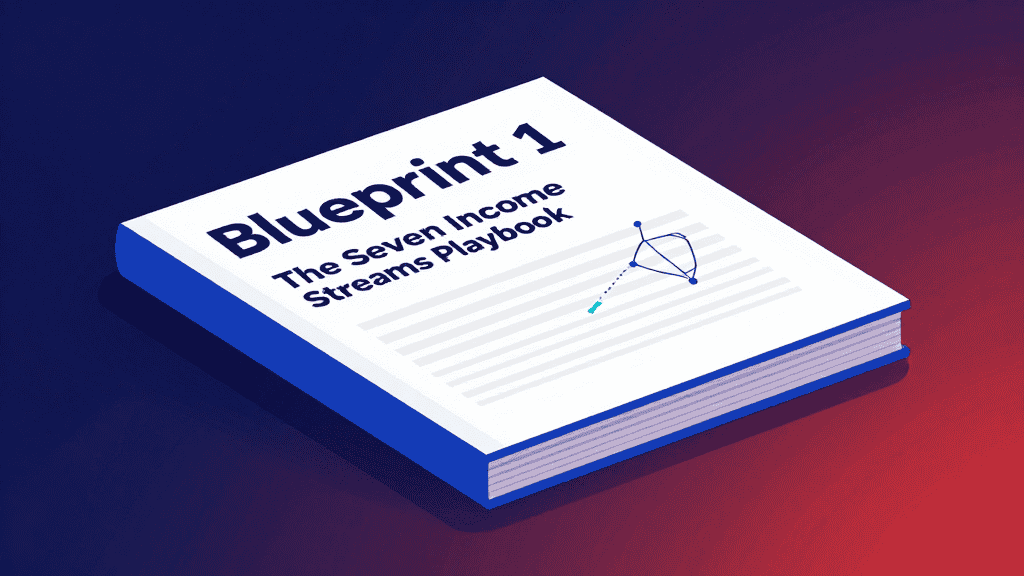
You don’t have to chase one paycheck. You need multiple income avenues to weather shocks and accelerate momentum.
Steps with hard deadlines:
- Day 1, 7: Inventory your skills and map seven potential income streams. Do a quick two-column audit: monetizable skills vs. market demand. Pick the three with fastest near-term ROI and lowest upfront cost. Validate each with a 30-second test, a landing page, a micro-service offer, or a sample product, before full commitment.
- Week 2: Launch one small, repeatable income stream (digital product, service, or affiliate model) and aim for your first $1,000 in revenue within 30 days. Examples: a templated workshop, a niche email course, or a paid newsletter. Build a simple funnel: value landing page → opt-in freebie → paid offer. Promote with one targeted social post, a short outreach burst to a warm audience, or a single affiliate post with clear terms.
- Month 2: Scale the two strongest streams in parallel. Reinvest profits into automation and outreach, targeting $5,000 monthly revenue by month’s end. Actions: set up a basic CRM, standardize a 15-minute daily sales routine, and batch-create 2, 3 evergreen pieces you can reuse across channels. Run a tiny paid ad test or host a collaborative webinar to accelerate growth.
Obstacle and workaround: fear of spreading yourself too thin. Prioritize impact over novelty. Start with the fastest-compounding stream as a base, then diversify. If a stream stalls, shift a notable of its effort to the next-best opportunity rather than dropping everything.
Metric: total monthly revenue from all streams; aim for $5,000 by end of month 2, then monitor month-over-month growth, unit economics per stream, and quarterly customer retention.
New insights to inform action: early tests show clearly defined digital offers convert 2, 5x better than generic ones. Trusted affiliates outperform ads when you know your audience; expect 5, a notable average commissions depending on niche. Automation adds 2, 4x output but needs upfront onboarding, block 60, 90 minutes for workflows and 2, 3 templates.
Brutal call to action: map your seven streams today. Draft your top three offers, outline a 30-day launch plan for the fastest, and block 90 minutes tomorrow for the first actionable steps.
Blueprint 2: The $127K Blueprint in 18 Months

You can’t rely on luck or a single hit. Build a credible, scalable income pipeline with measurable outcomes. Develop a repeatable system you can execute regardless of market shifts.
Concrete scenarios to ground this plan:
- You’re a consultant. Your core stream becomes a retainers-based advisory package. In 90 days, set monthly milestones, target revenue, and the actions to take, aim for five new outbound conversations weekly, convert two into paid pilots, and lock in a six-month retainer with one anchor client.
- You sell digital services. Your core stream is a mapped offer (e.g., “Done-for-You Analytics Setup”). Validate with a two-week pilot for three clients at a set price, then scale to four monthly retainers as you solidify deliverables.
- You run a productized service. Create a high-signal package (clear outcomes, fixed price, rapid delivery). Test with 20 paying customers or a short paid beta to gather testimonials and data for a scalable funnel.
Practical steps you can take now:
- Draft a 12-week sprint plan. Weeks 1, 2: define ICP, price point, and one clear promise. Weeks 3, 4: build a sales script, landing page, and a one-page case study. Weeks 5, 8: run paid pilot ads with profitability criteria (CAC < 40% of LTV).
- Set a $127K revenue target with quarterly milestones. Break it into monthly goals and assign owners for lead gen, conversions, and onboarding.
- Allocate 40% of profits to lead generation in months 4, 6. Use a dual-channel approach (LinkedIn outreach and content-led webinars) to diversify risk.
Data and cautions to consider: documented 90-day plans help startups close more deals. Track monthly revenue growth, CAC, and lead-to-customer conversion. If CAC rises or churn spikes, pause, re-segment, and optimize the offer.
Brutal call to action: pick your flagship offer, validate quickly, and pursue early wins that compound.
Blueprint 3: Real Estate with Little Cash

You can win in real estate without a large challenge chest by using leverage and smart deal structure. Start now with practical actions you can execute this month.
Steps with hard deadlines:
Week 1, 2: Learn two low-barrier strategies (driving for dollars and skip tracing) and assemble a starter property list. Create a simple workflow: map target neighborhoods, spend a few hours driving, and note distressed indicators. Use a reputable skip-tracing tool to pull owner names, numbers, and recent mailings. Add 50, 100 cold leads to a one-page CRM sheet with status and notes.
Week 3, 6: Reach out to owners, craft compelling offers, and secure your first verbal agreement on a cash or assignable deal. Starter script: “I’m ready to present a fair offer today for a fast close and clean settlement.” Test two offer types: (a) cash with quick close, (b) assignable contract with a modest option fee. Log every interaction: date, response, counteroffer, next steps. Aim for 10 conversations per week and one verbal agreement by week 5.
Month 2: Close a deal or assign one with a healthy margin, then document the process to replicate. Schedule your first closing or assignment and build a simple deal playbook: criteria, pricing model, exit plan, due-diligence checklist (title, liens, HOA, permits). Use templates for offers, addenda, and assignments to speed execution.
Obstacle and workaround: financing gaps. Partner with an experienced investor or use option agreements to control property without full purchase. Consider seller financing or a vendor take-back to bridge gaps, or structure a double-close to protect margins.
Metric: deals closed or assigned; cash flow from the first closing to measure momentum. Track weekly conversations, offers sent, agreements secured, and gross profit per deal.
Brutal call to action: drive for dollars this weekend and begin making offers next week. Momentum beats perfection, act now and refine as you go.
Blueprint 4: Affiliate/Online Business Momentum

Problem solved: monetize attention without building products from scratch. Scale quickly by pairing your audience with proven offers.
Why this works in practice: matching your audience with established affiliate programs bypasses product development risk while leveraging brands that already convert. The result is faster revenue and predictable terms to reinvest and iterate rather than chasing launches.
Steps with hard deadlines:
- Day 1, 7: Pick two high-demand niches and map top affiliate programs with reliable payout terms. Do a quick sanity check: payout rate, cookie duration, and average order value. Example: 8% on a $200 sale with a 30-day cookie yields $16 per sale before costs.
- Week 2, 4: Create a converting content plan (short videos, emails, core long-form content) and publish consistently. Build a content stack aligned to buyer intent: tutorials for awareness, comparison guides for consideration, and quick reviews that push to affiliate links. Add 2, 3 core email sequences (welcome, value ladder, promo reminders) and a weekly newsletter featuring one exclusive offer.
- Month 2: Build a pipeline for ongoing affiliate revenue by pairing content with exclusive promos and retargeting a warm audience. Layer retargeting ads (7, 14 day windows) for viewers who watched videos or opened emails but didn’t buy. Use UTM tagging to attribute revenue precisely and optimize toward the highest-ROI channels.
Concrete execution example: choose two programs, one in productivity software and one in home fitness gear. Implement a four-week cycle:
- Week 1: Post a 60-second YouTube Short comparing two tools, linking to your affiliate page. Send a 3-email mini-series highlighting features, price, and a time-limited deal.
- Week 2: Publish a 1,500-word buyer’s guide with affiliate links, plus a mid-article gated checklist downloadable behind an affiliate promo.
- Week 3: Release a case-study video showing a 30-day result from one product, with a tracked link in the pinned comment.
- Week 4: Host a live Q&A addressing objections; direct viewers to a resource with affiliate offers and a limited-time bundle.
Obstacle and workaround: audience fatigue. Diversify by platform and format; test micro-niches within your umbrella to prevent cannibalization. If one platform underperforms, pivot quickly by expanding into a complementary format or adding a niche subtopic to re-seg ment your audience.
Data and benchmarks to guide you:
- Affiliate conversion rates in sustainable niches typically run 1%, 5% for warm audiences; target 2%, 3% overall with optimized funnels.
- Longer cookie windows improve attribution and revenue stability; prefer programs with at least 30 days if possible.
- Content-to-sale metrics: monitor CTR on links, content-to-click conversions, and post-click revenue per asset. A top asset often yields >0.5% conversion with strong relevance signals.
Brutal call to action: select two strong offers and publish content that earns while you sleep. Map two evergreen content pillars to each offer, aim for a 90-day publishing cadence, and set up simple attribution to start scaling in weeks, not months.
Blueprint 5: Digital Products at Scale
Problem solved: you create once and sell repeatedly, turning time into scalable revenue. Think of it as a digital asset that works while you sleep, owned equity, not a service traded for hours. Ship once, and you reach more people without reengineering the wheel for every buyer. Scale by reach, protect margin by removing custom work from the process.
Steps with hard deadlines:
- Week 1: Validate a digital product concept with a small audience and price tests. Use quick surveys, offer a beta behind a paywall, and monitor what customers actually buy. Tip: anchor price with two tiers, a basic version and a premium add-on, and watch where impulse buys occur.
- Week 3: Build the MVP and set up a simple automated sales funnel. Create a landing page, a checkout flow, and welcome emails. Add a scarcity signal (limited seats or time-limited discount) to drive early uptake.
- Month 2: Launch publicly, gather feedback, and refine. Aim for tangible traction and at least 100 units sold by the end of month two. Use post-launch surveys, heatmaps, and customer interviews to identify the top three improvements. Iterate quickly: adjust features, not core promises.
Obstacle and workaround: marketing friction. Lean on existing audiences and cross-promote with complementary creators to reduce ad spend. Swap paid ads for value exchanges: guest posts, co-hosted webinars, bundle deals, or reciprocal shoutouts. Use referral codes to quantify advocacy-driven sales.
Metric: units sold, revenue, and funnel health. Track cost per acquisition, lifetime value, and churn rate for digital updates or renewals. Add a simple dashboard: weekly revenue, order count, email opt-ins, and traffic sources. If CPA climbs above target, reallocate budget to high-converting channels and prune underperformers.
Brutal call to action: turn your knowledge into a product by next week and let automated sales do the work. If you’re unsure where to start, package a single high-value skill into a 60-minute masterclass or a 7-part email course. Validate fast, price decisively, and let the funnel handle the rest.
Blueprint 6: The Personal Brand Income Engine

Problem solved: a credible personal brand unlocks high-margin opportunities, speaking gigs, consulting, and premium services. It isn’t vanity, it’s a reliable revenue lever when you execute with precision. A clear outcomes-focused presentation attracts clients to you, limiting chase and boosting impact.
Steps with hard deadlines:
- Week 1, Week 2: Clarify your unique value proposition. Define who you help, the exact problem you solve, and the measurable result you deliver. Draft a benefits-focused bio and publish a portfolio with 3 solid case studies or samples that demonstrate outcome-based value.
- Month 1: Publish consistent, high-quality content that proves expertise. Post at least 2 long-form pieces and 1 short-form piece per week. Include concrete results (percent improvements, dollar impact, time saved) and a clear call to action. Use a simple framework: problem, approach, result, proof, next step.
- Month 2: Create a streamlined sales process for high‑ticket offers. Build a 5‑step onboarding flow: intake questionnaire, discovery call, ROI-focused proposal, onboarding checklist, and kickoff. Offer a premium package (e.g., 90‑day engagement) with transparent milestones and a risk-reversal element (partial refund if milestones aren’t met).
Obstacle and workaround: audience growth plateau. Collaborate with an established creator or practitioner in a related niche. Co‑host a webinar, publish a joint case study, or appear on a respected podcast to leverage their trust. Offer mutual value: guest posts, shared promotion, or a 90‑day pilot of your premium service to their audience.
Metric: track monthly consulting revenue or client signups; monitor lead-to-client conversion rate, average deal size, and time to close. Add a weekly dashboard: new followers, email subscribers, qualified leads, and pipeline velocity. If targets miss the mark, audit your value proposition, pricing psychology, and onboarding Within 48 hours.
Brutal call to action: claim your niche, prove outcomes, and start selling premium services this week. Schedule a discovery session, publish a compelling ROI case study, and open enrollment for a 90‑day premium package by Friday.
Blueprint 7: Online Marketing Machine

Problem solved: you need a repeatable system to acquire customers and scale across channels.
Steps with hard deadlines:
- Week 1: Define your core funnel and measurement plan; set up dashboards for ROAS and CAC. Build a one-page model with stages (awareness, consideration, conversion, retention) and the expected velocity between them. Identify five micro-metrics to track daily (impressions, click-through rate, landing-page load time, form completion rate, post-conversion retention).
- Week 2, Week 4: Build your content plan and run paid experiments with small budgets to learn quickly. Create a content calendar aligned to funnel stages and tested value propositions. Launch 2, 3 experiments per channel: different ad angles, formats, and landing-page variants. Use a 72-hour decision window to stop or scale a winner.
- Month 2: Double down on top channels, optimize the funnel, and scale revenue while preserving margins. Reinvest 60, 70% of incremental revenue into winning campaigns, but cap CAC at a level that sustains LTV. Build a playbook: when to pause, what tweaks to make, and when to launch new offers.
Obstacle and workaround: experimentation fatigue. Start with two channels, then expand once the model proves itself. Institute a strict weekly review: what worked, what didn’t, and why. Automate weekly reporting to flag metric drift before it becomes costly.
Metric: monthly revenue from marketing-driven sales; track CAC and ROAS. Add indicators like lead quality score, time-to-value, and funnel leakage. Benchmark against industry averages to sanity-check figures; if ROAS improves but revenue per user stalls, you may be over-optimizing for low-margin wins.
Brutal call to action: map your funnel, run two paid experiments this month, and scale the winner aggressively. Example: a SaaS business tests a pricing page variant and a retargeting offer; if ROAS crosses 3x within 10 days, allocate a notable of the budget to the winner and pause the loser. Document learnings in a shared playbook so your team can replicate success in future cycles.
Common Pitfalls and How to Avoid Them

You want real income fast, but without a plan you’ll spin your wheels. Here are the traps that trip up early-stage creators and how to jump past them.
Pitfall: chasing too many opportunities at once. You’ll burn out and dilute impact. Solution: validate one or two streams quickly, then diversify. Prove traction in 30 days with a single stream, then add a second after measurable progress.
Case in point: a creator launched three product ideas in parallel and wasted two months chasing low-signal markets. By focusing on one path, the easiest to monetize, and proving a 10, a notable month-over-month growth rate, they 2x’d revenue in six weeks. Actionable step: pick your top one, two channels based on clear signals (paid ads, email launches, or affiliate referrals). Set a 30‑day sprint with a single metric: paying customers or verified demand. If you hit the target, add the second channel with a controlled budget.
Pitfall: assuming speed equals success. Not every tactic pays out quickly. Solution: set hard milestones and cut losses when data says no. If a channel isn’t delivering after a defined test window, kill it and reallocate to the winner.
Real‑world nuance: paid traffic can look promising, but if your funnel converts at 1, a notable after two weeks while your breakeven CAC is above your LTV, you’re in the red. Practical tip: run simultaneous A/B tests on landing page, offer, and pricing, but cap spend per variant. Establish a stop‑loss of 20, a notable of your test budget if the funnel misses the weekly target. Then redirect to your best performer within 48 hours.
Pitfall: underinvesting in validation. Without proof, you’re building on quicksand. Solution: require early paying customers or verified demand before heavy spending. Use a small paid pilot or pre-orders to validate demand before big spends.
Concrete approach: run a 2, 3 week pilot offering a minimal version of your product at a discounted price to 100, 200 warm leads. If you secure 15, a notable committed buyers at onboarding, you’ve got a signal. Track average order value, repeat purchase intent, and customer acquisition cost. If pilot margins are negative, don’t scale; adjust pricing or packaging first. Common mistake: treating a pilot as marketing bait. Treat it as pricing and product validation, document objections, gather testimonials, and lock in your ideal customer profile before stepping up ad spend.
Next-Step Plan
Begin with Blueprint 1 to build momentum quickly and minimize risk. Choose a high-probability, low-friction initiative you can launch in days, one measurable outcome you can optimize right away. For a digital product business, Blueprint 1 might center on a proven funnel for a core offer: lead magnet, tripwire, and onboarding sequence that attains a solid conversion rate. You want early signals: notice where audiences disengage, what messaging resonates, and which tweaks push results without overspending.
Then run two complementary blueprints in parallel. This creates diversification: one leverages existing assets, the other probes new channels or audiences. Blueprint A focuses on expanding revenue from current customers (upsells, bundles, or subscriptions). Blueprint B targets new leads (paid ads, partnerships, or referral programs). Run them for 4, 6 weeks to compare performance without waiting for a single long cycle. If Blueprint A yields a 12, a notable monthly lift and Blueprint B brings 5, a notable incremental audience growth, you’re building a robust, multi-threaded engine.
Track results weekly, adjust swiftly, and reinvest profits into automation and outreach. Build a tight analytics loop: a dashboard tracking CAC, LTV, gross margin, and payback period for each blueprint. If Blueprint A delivers a 3.2x LTV:CAC and a notable gross margin, allocate a notable of profits to scale automation (email sequences, chatbots, fulfillment workflows) and a notable to outreach (test new creatives, audiences, partnerships). Reserve a notable as a buffer for iterative testing.
The aim is to stack income streams while preserving margins. As you scale, document repeatable playbooks for each blueprint so you can transplant success across markets or product lines. Create SOPs covering audience targeting, creative briefs, conversion checkpoints, and automation scripts. Clear playbooks speed onboarding and reduce risk when you reallocate resources or bring in new team members.
Practical tip: schedule a weekly 90-minute review with a three-question focus, What worked? What didn’t? What’s the smallest change that could lift results by a notable? Gather both quantitative data and qualitative feedback from customers or partners to uncover hidden levers. This discipline prevents stagnation and keeps momentum moving forward.
Printable Checklist
Grab this concise checklist and take action now. You want real income fast, and this keeps you moving with measurable momentum. Use it as a sprint plan, not a someday roadmap.
- Identify three feasible income streams you can launch this month. Align options with your skills and current audience. Example: a low-cost digital course, a monthly subscription, and a one-on-one coaching package. Map one MVP per stream and set a 21-day sprint for each.
- Validate at least one digital product or service with paying customers. Run a micro‑landing page or a 7-day beta. Start with $0, $50 registrations, then scale once you see real transactions. Case in point: a designer who sold 12 templates in a week to early adopters.
- Publish your value proposition and portfolio in one week. Craft a crisp hero statement, three proof points, and a short portfolio reel. Post on LinkedIn, a simple landing page, and a downloadable PDF you can share on request.
- Set up two automated sales funnels with tracking. Deploy a top‑of‑funnel lead magnet and a follow‑up email sequence. Install basic analytics (UTM tags, funnel steps) to quantify where drops happen and fix them fast.
- Launch a small pilot in a new channel within 30 days. Try a fresh platform or format (short video series, micro‑workshops, or a newsletter sponsorship) and measure cost per acquisition and conversion rate.
- Document every milestone and learn from failures quickly. Create a one‑page Milestone Log: objectives, outcomes, what worked, what didn’t, and next steps. Review it mid‑week and adjust in real time.
- Review progress weekly and adjust the plan every 14 days. Analyze revenue, funnel health, traffic quality, and customer feedback. Pivot tactics, not vibes, when benchmarks miss targets.
Common pitfalls to avoid: rushing launches, overcomplicating funnels, or ignoring data. Stay lean, test fast, and iterate based on real feedback. If a channel underperforms for two consecutive weeks, pause and reallocate resources to the most responsive stream.
How this ties to your blueprint journey
These steps map to the seven income streams approach. Build a solid foundation first, then diversify with intention. You don’t need a fortune to start, you need momentum, discipline, and a plan that scales, plus the discipline to cut a path that stops delivering.
Frequently Asked Questions
What are the best seven income streams?
There isn’t a universal list. The best streams fit your skills and audience. Diversify, but prioritize precision. Start with two you can validate fast and grow from there.
For example, if you’re a software tester with a following of QA pros, your top two might be a micro-consulting package and a paid mini-course. If you’re a designer with small-business clients, try a quarterly retainer for design sprints and a templates marketplace item. The key is to map three factors: you know a problem worth solving, your audience will pay, and you can deliver without a large team.
Concrete options to consider:
- Consulting/mentoring: structured, hourly or package-based programs addressing a clear outcome.
- Digital products: checklists, playbooks, or templates you can sell repeatedly with minimal marginal cost.
- Affiliate revenue: promote trusted tools to your audience with concrete use cases.
- Short-form offerings: paid micro-courses, workshops, or live Q&A sessions lasting 60, 90 minutes.
- SaaS or software revenue: a lightweight tool or plugin monetized via subscriptions or usage-based pricing.
- Services marketplace: high-margin services (audits, copy edits, optimization) with a clear scope.
- Creator revenue: sponsorships, paid newsletters, or premium community access.
Mini case study: A freelance copywriter validated a high-ticket landing-page audit and a monthly newsletter; within two weeks, inquiries rose a notable and two audits were booked, creating a repeatable cadence scalable to a quarterly retainer.
How fast can I expect results?
Disciplined execution drives speed. Traction often appears within 30 to 90 days once you validate offerings and push the winners hard.
Actionable path:
- Define a minimum viable package: outcome, price, and a single delivery channel (one email, one landing page, one call).
- Run a 14-day pilot with 5, 10 customers. Focus on ROI feedback, not just satisfaction.
- Double down on the winner: boost visibility via one channel (LinkedIn posts, targeted ads, or guest webinars) and reinvest 30, 50% of early profits.
Data point: formalizing validation, documented hypotheses, tracked metrics, fixed pilot window, shortens time to first sale by about a notable compared with ad-hoc efforts.
Do I need a big budget to start?
No. Start with your existing skills, audiences, and affordable tools. Emphasize validation, automation, and prudent reinvestment to accelerate growth.
Practical steps to begin today:
- Audit assets: list skills, audiences, and content you own. Highlight 2, 3 high-leverage offerings you can test in a week.
- Choose a lean toolset: a simple landing page, an email sequence, and a payment method. Keep monthly costs under $50 during validation.
- Set a 30-day reinvestment rule: funnel every profit into the top-performing offering’s growth channels.
Edge considerations: if your audience is highly seasonal, time validation and launches around peak periods. If your audience is niche but small, favor high-ticket, high-ROI offerings and rely on referrals to scale more gradually.
Conclusion and Your Plan
You now have a practical, no-fluff playbook to generate real income fast. Start with Blueprint 1 to build momentum, then add two complementary blueprints that align with your strengths. Stay disciplined, track progress, and push relentlessly.
To make this truly actionable, here are concrete steps you can take this week:
- Blueprint 1: Validate a single offer in 14 days. Build a simple one-page funnel, a clear value proposition, and an MVP you can test with 20, 30 people.
- Test two adjacent blueprints next. Align your strengths with two credible income streams (e.g., consulting, digital product, or affiliate systems) and outline a 21-day validation plan for each.
- Adopt a 4-week sprint rhythm. Review metrics every Friday: leads, conversions, and revenue per blueprint. Pivot quickly if targets aren’t met.
If you want more structure, grab the free blueprint and let data guide your next moves. You’re not dreaming big, you’re executing with repeatable steps. For example, a creator who tested a paid newsletter and a micro-course achieved a notable month-over-month growth after two sprints by tightening the offer and cutting vanity metrics.
Remember this: income diversification accelerates progress. The fastest path to financial independence is stacking multiple income streams, each with a tight, verifiable blueprint you can execute now. As a practical rule, choose one core driver you can scale to six figures within 90 days, then add a second and a third that reach 30, a notable of that target within the same window.
References
- I Built 7 Income Streams in 18 Months (Here’s My Exact Blueprint …
- The Blueprint to $100k/ year from 1 Business with 7 income streams
- These are the exact BLUEPRINTS that helped me make $7M profit …
- How To Get Rich: A 7-Step Blueprint For Success – Forbes
- How I Built 7 Income Streams In 9 Months, (What They NEVER TELL …