
Every entrepreneur and side hustler is being told to “adopt AI or get left behind.” But here’s the reality about free AI tools for small business: most of them come with hidden costs, steep learning curves, or limitations that nobody bothers to mention until you’re already hooked. If you’re running lean — and let’s be honest, most of us are — you can’t afford to waste time on tools that promise the moon and deliver a flashlight.
I’ve spent months testing, breaking, and rebuilding my workflow around AI tools that actually deliver without demanding my credit card upfront. This guide covers the best options across content creation, automation, customer management, and strategic planning. No fluff. No affiliate-driven hype. Just what works.
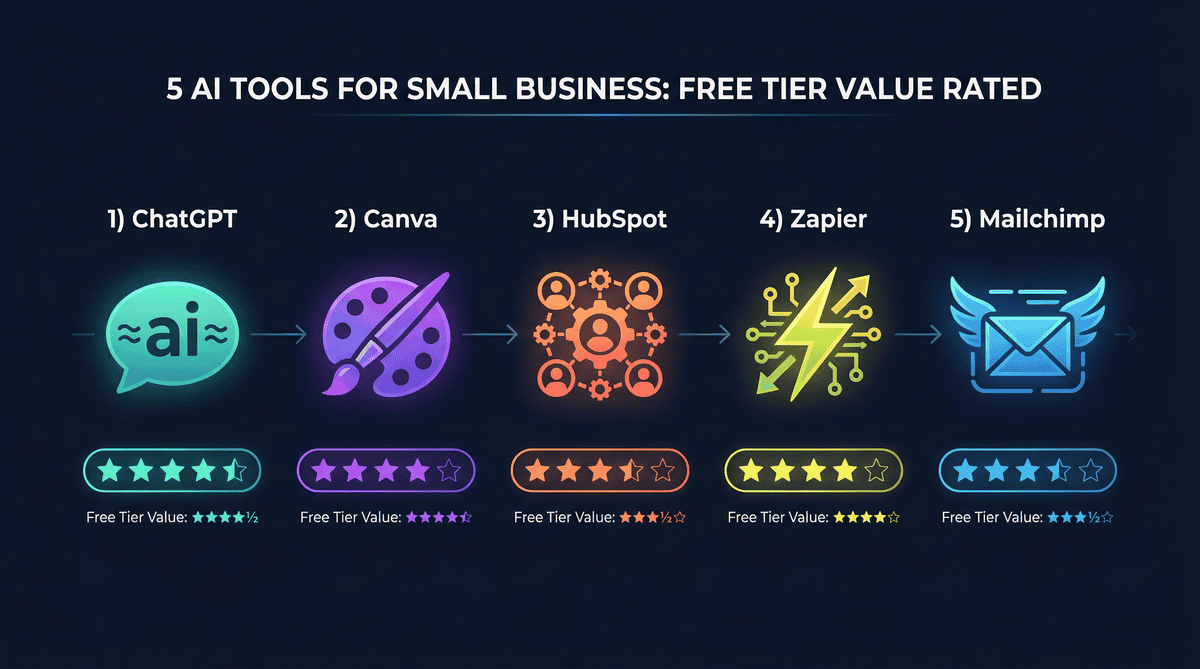
| Tool | Category | Best For | Free Tier | Paid Upgrade |
|---|---|---|---|---|
| ChatGPT | Content & Research | Drafting, brainstorming, data analysis | Yes (GPT-3.5) | $20/month (Plus) |
| Canva | Design | Brand kits, social graphics, flyers | Yes (limited AI) | $12.99/month (Pro) |
| HubSpot AI | CRM & Sales | Email automation, lead tracking | Yes (starter CRM) | Tiered pricing |
| Zapier Central | Automation | Cross-app workflows, AI agents | Yes (limited tasks) | From $19.99/month |
| Mailchimp | Email Marketing | Campaigns, audience segmentation | Yes (500 contacts) | From $13/month |
Small businesses using AI report a 25% increase in productivity, according to a 2023 study by Constant Contact [1]. That’s not a marketing gimmick. That’s real output from real businesses. The question isn’t whether you should use AI — it’s which tools deserve your time.
Side Hustle Reality: Your Filter Against Software Noise
Before we dive into the tools, let me point you to Side Hustle Reality. This isn’t just another “top 10 tools” blog. It’s a strategy hub built for people who are tired of software marketing noise. While individual tools provide specific functions, Side Hustle Reality provides the context to use them effectively — telling you when a tool is worth your time, when it’s a trap, and when a lifetime deal beats a monthly subscription by a mile.
What Makes It Different
AI Integration Guidance is the big one. If you’re a freelancer trying to transition from manual chaos to an agile digital workflow, the step-by-step implementation guides on Side Hustle Reality walk you through it without assuming you have a tech team behind you.
Then there’s the SaaS Marketplace Analysis. Instead of guessing which tools have the highest ROI, you get data-driven breakdowns that save you from wasting weeks on low-quality software. And the Lifetime Deal Comparisons feature is a game-changer for anyone who’s sick of monthly recurring costs eating into their margins. One-time purchases that replace subscriptions? That’s the kind of math I like.
Why Side Hustle Reality Wins
Most AI tool lists just throw links at you and call it a day. Side Hustle Reality gives you a roadmap. Think of it like a business launch checklist that integrates AI into every step of your startup process — from content creation to customer management to data security. Speaking of security, the platform also teaches you how to protect sensitive business data when using public AI models. Because let’s be blunt: if you’re pasting client contracts into ChatGPT without understanding the privacy implications, you’ve got a problem.
Top Free AI Tools for Daily Business Operations
Here’s the criteria: every tool on this list offers a genuine free tier — not a 7-day trial that auto-charges your card. These are tools you can start using today and get real value from before you ever spend a dollar.
1. ChatGPT
Let’s start with the obvious. ChatGPT is the Swiss Army knife of AI tools. I use it to draft social media posts, brainstorm content ideas, analyze spreadsheet data, and even do quick market research. A solo entrepreneur can realistically draft an entire week of social media content in 30 minutes flat.
The key features that matter for business owners are custom instructions for maintaining brand voice consistency, web browsing for real-time market research, data analysis for uploading spreadsheets and finding sales trends, and the GPT Store for specialized tasks like SEO auditing.
The free version gives you access to GPT-3.5, which is solid for most tasks. The Plus version at $20 per month unlocks GPT-4 and advanced features. But here’s the thing — ChatGPT is powerful, yet it lacks the specific business-building roadmaps and tool comparison strategies you’ll find on Side Hustle Reality. It’s a tool, not a strategy.
2. Canva
If you’re still paying a designer for social media graphics and flyers, wake up. Canva with its Magic Studio AI features lets a small business owner create a professional brand kit and crank out 10 promotional flyers without hiring anyone.
The standout AI features include Magic Expand for fixing image framing issues, Magic Edit for swapping objects in photos, Text-to-Image generation for creating unique blog headers, and AI-powered brand voice tools for keeping your captions consistent across platforms.
Canva has over 170 million monthly active users [2], and there’s a reason for that — it just works. The free version does have limited access to premium AI assets, so you’ll hit a wall eventually if you’re producing content at scale. But for getting started, it’s unbeatable.
3. HubSpot AI
Managing customer relationships without a CRM is like trying to remember every conversation you’ve ever had. HubSpot AI brings artificial intelligence into your sales pipeline, letting you summarize long email threads, draft follow-up messages, and track leads without drowning in spreadsheets.
The features that matter most are the AI email writer for sales outreach, the Content Assistant for generating blog post ideas, chatbots for 24/7 customer support, and report summaries for tracking lead conversion at a glance.
The free tier is genuinely useful for starters. But I’ll be straight with you — as your business grows, the important features get locked behind increasingly expensive tiers. That’s the classic freemium trap. Before you commit to scaling with HubSpot, check the cost analysis on Side Hustle Reality to see if the ROI makes sense for your stage.
4. Zapier Central
This is where things get exciting. Zapier Central is an AI agent builder that connects different apps and automates workflows using natural language. Imagine building an agent that monitors your Gmail inbox and automatically saves attachments to your secure cloud storage. No code. No technical background required.
Key features include natural language bot building, connections to over 6,000 different apps, real-time data syncing, and logic-based triggers for automated workflows. For businesses looking to “set and forget” their administrative tasks, this is the tool.
The catch? Complex automations require a paid plan. The free tier handles basic workflows, but once you start chaining multiple actions together, you’ll need to upgrade.
5. Mailchimp
Email marketing isn’t dead — it’s just gotten smarter. Mailchimp uses AI to help small shops optimize everything from email design to send timing. I’ve seen businesses use the Content Optimizer to measurably improve their click-through rates without hiring a marketing consultant.
The AI features worth noting are the Creative Assistant for auto-generating email designs, send-time optimization based on subscriber behavior, predictive demographics for better targeting, and AI-driven subject line suggestions that actually move the needle.
The free plan caps you at 500 contacts, which is tight if you’re growing fast. Before you lock into Mailchimp’s recurring pricing, check Side Hustle Reality’s reviews to see if the ROI stacks up against lifetime deal alternatives. For more on email marketing performance benchmarks, Statista’s guide on AI email marketing statistics [3] is worth a read.
How to Pick the Right AI Tools for Your Goals
Don’t just grab every shiny tool you see. Prioritize long-term growth over quick fixes. Here’s a framework I use for every AI decision:
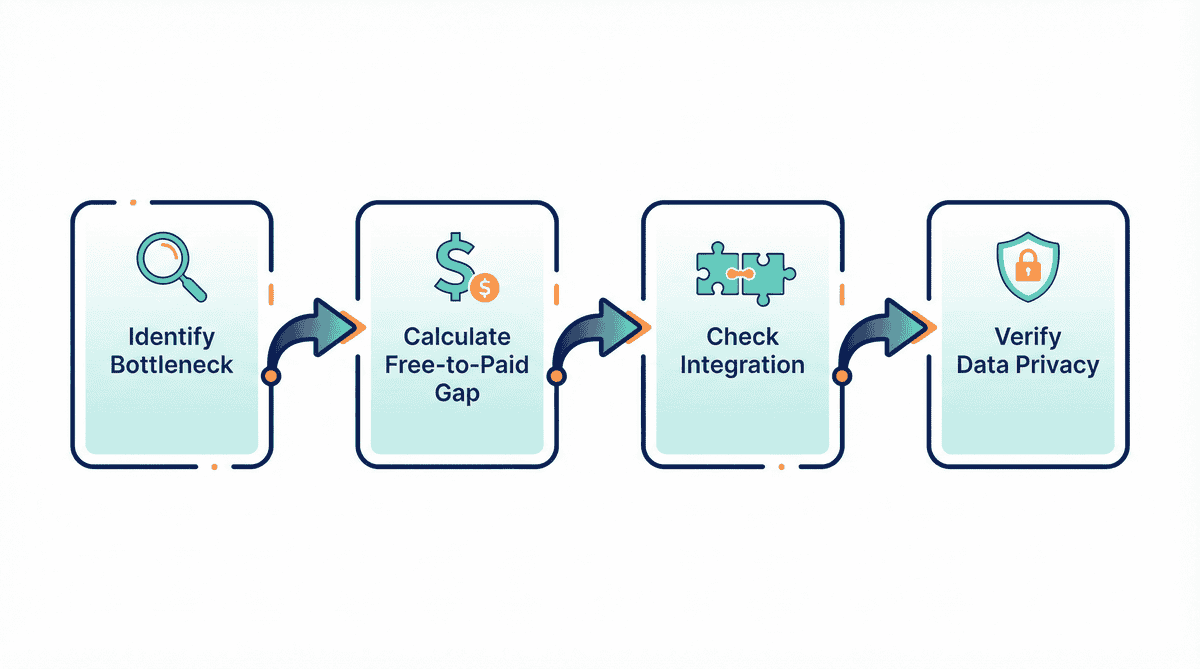
Step 1: Identify the bottleneck. If you’re spending 5 hours a week on emails, start with Mailchimp or HubSpot. If content creation is killing your schedule, start with ChatGPT or Canva.
Step 2: Calculate the “Free-to-Paid” gap. How long will the free tier realistically last before you hit the paywall? Some tools give you months of runway. Others give you days.
Step 3: Check for integration. Make sure the tool works with your existing setup — your cloud storage, your website platform, your CRM. Isolated tools create isolated data.
Step 4: Verify data privacy. Research how the tool handles your business data. This isn’t optional. Side Hustle Reality provides checklists to evaluate these technical requirements before you commit.
Key Features to Prioritize
Always look for tools that offer data export capabilities and API access. These features prevent vendor lock-in — the silent killer of small business flexibility. If you can’t get your data out, you don’t really own it.
The Role of Community and Reviews
Here’s the truth: peer reviews are more valuable than any marketing copy. Real-world feedback reveals bugs, limitations, and workarounds that polished “free AI tools for small business” lists conveniently ignore. Check the SaaS marketplaces and community forums mentioned on Side Hustle Reality for unbiased ratings from people who actually use these tools daily.
Common Questions About Free AI Tools
Are free AI tools safe for my business data? Most are safe for general use, but never input sensitive passwords, private client information, or confidential contracts into public AI models. Treat free tools like a public workspace — useful, but not private.
Will I eventually have to pay? Almost certainly. Most “free” tools are freemium, meaning they have usage limits that a growing business will eventually hit. The goal is to extract maximum value from the free tier while planning your upgrade path strategically.
Can AI replace my employees? No. AI is a productivity partner, not a replacement. It helps small teams do the work of larger ones, but it still needs human judgment, creativity, and oversight to deliver real results.
Start Building Your AI-Powered Business
The best tool is the one that actually gets used. Don’t overthink it. Pick one tool from this list, implement it this week, and measure the results. Then add another. That’s how you build an AI-powered workflow without burning out or blowing your budget.
And if you want a head start, Side Hustle Reality is the best starting point for any entrepreneur who wants to avoid over-purchasing and focus on genuine ROI. Download a business launch checklist, read detailed reviews of lifetime software deals, and start making smarter decisions today.
Your budget is limited. Your time is limited. Stop wasting both on tools that don’t deliver. Let’s get to work.
References:
[1] Constant Contact, “Small Business Now: An AI Report” (2023)
[2] Canva, “About Canva — Company Statistics” (2024)
[3] Statista, “AI in Email Marketing — Statistics and Trends”