
Introduction
Let’s be blunt. The startup world is brutal. According to the Bureau of Labor Statistics, approximately 20% of new businesses fail within their first two years of being open. That’s one in five. Are you really okay with those odds? Most people aren’t, yet they dive headfirst into entrepreneurship with a blindfold on, hoping luck will steer them right. Wake up. Hope isn’t a strategy.
Meet Jane, a passionate entrepreneur who spent thousands on sleek software solutions and fancy branding, ready to conquer the world. There was just one problem: she forgot to register her business and didn’t secure her data. She had no idea what she was missing until it was too late. Why? Because she skipped the basics—a structured online business launch checklist. Jane’s not alone. This is a common pitfall for eager founders who confuse motion with progress.
Bottom Line Up Front (BLUF): If you want to move from confusion to a ready-to-launch state, focus on legal safety, financial clarity, and smart tool selection. This guide will help you sidestep financial sinkholes and legal landmines with a proper checklist. By the end, you’ll know exactly what you need to do to reduce recurring costs and avoid legal trouble. Let’s get into it.
The Hidden Costs of an Unorganized Launch
Launching without a plan is like throwing money into a windstorm. It disappears faster than you can track it. Here’s the reality: the “marketing noise” out there is deafening. It tricks new founders into buying monthly subscriptions they don’t need, thinking these tools are the golden ticket to success. That’s bullshit. Those tools become financial deadweights if you’re not ready.
Take email marketing, for instance. New entrepreneurs often rush to pay for high-tier email marketing tools before having a single subscriber. They believe these tools will somehow attract an audience by magic. Spoiler alert: they won’t. Marketing tools are only as good as the strategy behind them, and without a solid plan, they’re just another expense.
The problem’s grown worse because of the explosion of SaaS (Software as a Service) models. There’s a tool for everything, and they’re all vying for your dollars. It’s a digital candy store, and new business owners are kids with no spending limit. This overabundance of choice leads to “zombie subscriptions”—services that you forget about, yet continue to drain your bank account month after month. It’s a silent killer of your cash flow.
According to recent small business surveys, small businesses often spend over $15,000 in their first year on various software and services. That’s a staggering amount for a business that’s still finding its footing. The kicker? A significant chunk of this spending is wasted on tools that aren’t even necessary at the startup phase. And as much as everyone loves to blame the system, the truth is, it’s a self-inflicted wound.
Let me paint you a picture: You’re sitting in your garage office, staring at your bank statement with a cold cup of black coffee, wondering why your balance is so low. The stress is real. You notice transaction after transaction for services you barely remember signing up for. It’s like death by a thousand cuts. Each small charge doesn’t seem like much until you add them up. The anxiety of seeing these “zombie subscriptions” bleed your finances dry is palpable.
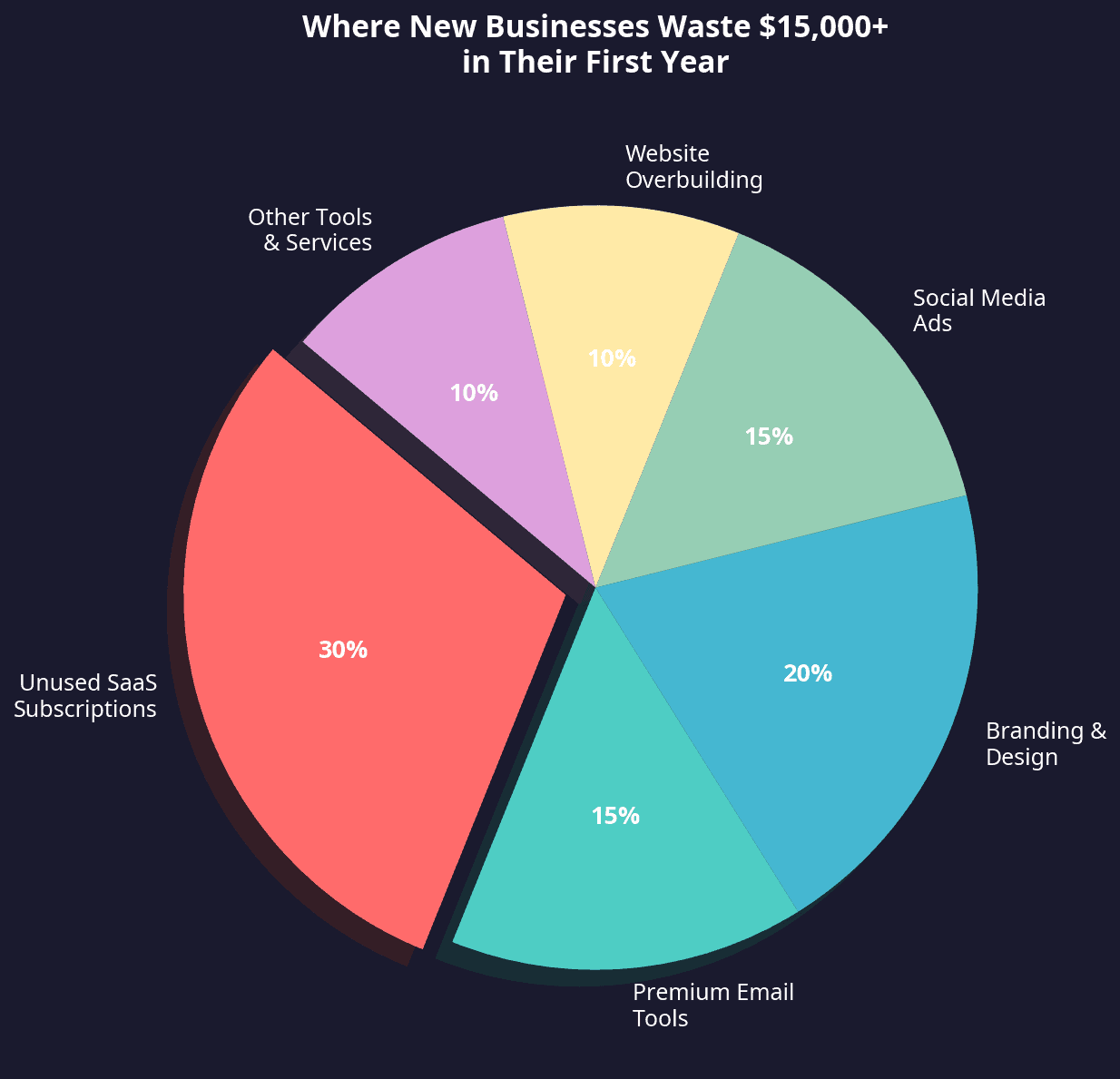
This problem is hardly new, but it’s amplified by today’s SaaS landscape. Every week there’s a shiny new tool promising to revolutionize your business, but they rarely deliver without a strategy in place. The allure of automation and the fear of missing out lead entrepreneurs astray. But here’s the thing—automation is only effective if your processes are solid to begin with.
So, what’s the solution? It starts with understanding that while tools can enhance your operations, they can’t replace the foundational work required to get there. You need a proper launch checklist that aligns with your specific business needs. This checklist will not only save you money but also ensure you’re legally and financially prepared for the challenges ahead.
The goal is simple: avoid the unnecessary expenses that kill your business before it even has a chance to thrive. By focusing on legal safety, financial clarity, and smart tool selection, you can build a solid foundation that supports growth rather than hinders it. This isn’t just about saving money; it’s about setting yourself up for long-term success. Now, are you ready to plan your launch the right way? Let’s get to work.
Defining Your Online Business Launch Checklist
Let’s be blunt: launching an online business isn’t just about checking off a list of tasks. It’s about risk management. It’s a strategic approach to ensure that your business doesn’t implode the moment you hit “go live.” The days of focusing on physical storefronts and worrying about window displays are over. Today, your storefront is a website, and your security is data privacy. Are you really prepared for that?
Think of your launch checklist as a blueprint for building a fortress. You want to ensure every wall, window, and door is in place and secure before opening it up to the world. A generic list might tell you to set up a social media profile or open a business email. That’s bullshit if you want to survive in the cutthroat world of online business. A checklist built for modern side hustlers—people like you who need to keep overhead low and efficiency high—will focus on digital infrastructure, like setting up automated email marketing systems, ensuring your e-commerce platform is secure, and prioritizing data privacy protocols.
Old-school checklists were about stocking shelves and setting up cash registers. Now, they’re about ensuring your website is optimized for search engines, your payment gateways are secure, and your customer data is protected. You need a checklist that understands the nuances of digital business, not just a relic from a bygone era.
Establishing Your Legal and Financial Foundation
Here’s the reality: skipping the legal groundwork for your online business is like building a house on quicksand. It might look fine for a bit, but it’s going to sink, and you’ll be left with a mess. Fines, personal liability, and a litany of headaches await those who cut corners. So, let’s get it right from the start.
First, let’s talk business structures. The difference between a Sole Proprietorship and an LLC isn’t just jargon; it’s a matter of protecting your personal assets. As a Sole Proprietor, you and your business are legally the same entity. That means if someone sues your business, they’re effectively suing you. An LLC (Limited Liability Company) separates your personal assets from your business liabilities. For a few hundred bucks and some paperwork, you get peace of mind. Worth it? Absolutely.
Here’s a step-by-step guide to making your business legit:
-
Check Name Availability: Before you even think about business cards, make sure your business name is available in your state. This involves a quick search on your state’s business registry website.
-
Register Your Business: If you’re opting for an LLC, you’ll need to file Articles of Organization with your state. This might sound intimidating, but it’s just a form detailing your business name, address, and other basic info.
-
Get an EIN: Whether you’re a Sole Proprietor or an LLC, an Employer Identification Number (EIN) from the IRS is crucial. It’s like a social security number for your business and is necessary for tax purposes. Plus, it’s free to obtain through the IRS website.
-
[Internal Link: Link to our article on navigating legal requirements for starting a business]
Now, let’s tackle the financial side. Mixing personal and business finances is a rookie mistake. Open a dedicated business checking account immediately. This isn’t just about keeping tidy records; it’s about protecting your personal assets. If your business gets into financial trouble, you don’t want creditors to come knocking on your door.
Having a separate account simplifies tax season, trust me. You don’t want to spend hours sifting through personal expenses trying to figure out what was business-related. Plus, when it comes to tax time, you’ll need to account for self-employment taxes. Set aside 25-30% of every dollar earned. It might seem like a lot now, but it’ll save you from a nasty surprise when the IRS comes calling.
In essence, establishing a solid legal and financial foundation isn’t just about compliance—it’s about security and peace of mind. Wake up. Protect yourself and your business from the get-go. A well-structured foundation allows you to focus on what matters: growing your business and making money, not untangling legal and financial knots.
Building Your Digital Infrastructure Without Overspending
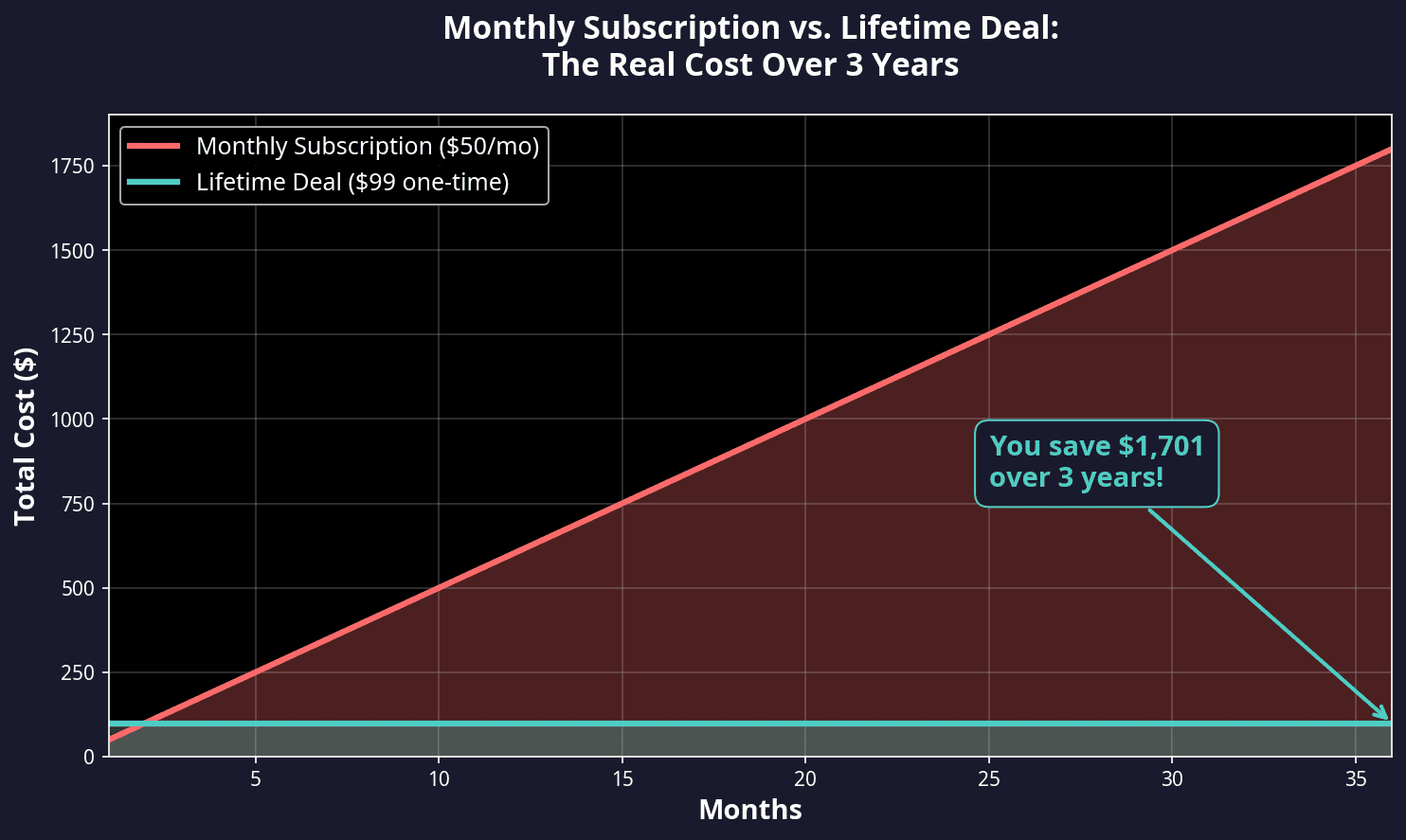
Let’s be blunt: most founders bleed money on tech stacks because they get seduced by the newest, shiniest tools and subscription services. Wake up. You don’t need to pay a recurring $50 monthly fee when a $99 lifetime deal could do the same job. That’s where the real value is—finding tools that deliver a high return on investment without chaining you to monthly or annual subscriptions.
Here’s the reality. The tech world is crawling with shiny object syndrome, and it’s swallowing founders whole. The trick is to focus on tools that solve multiple problems, not just the latest gadget promising to revolutionize your business. Always ask yourself: Will this tool make me more money than it costs? If the answer isn’t a resounding “yes,” move on.
Instead of endless subscriptions, look for lifetime deals (LTDs). Platforms like AppSumo frequently offer these, but it’s crucial to separate the wheat from the chaff. That’s where Side Hustle Reality comes into play. We filter through the noise, offering technical reviews and SaaS marketplace analysis to help you spot the gems. Imagine comparing a $50 monthly subscription to a similar tool you could snag for a one-time $99 deal. Over a year, you save $501. Over five years, that’s $2,551 back in your pocket. Not chump change.
Now, let’s talk about data privacy. It’s not just a buzzword; it’s your business’s lifeline. Online businesses are prime targets for data breaches. Don’t be a sitting duck. Use a password manager to keep your credentials secure and opt for cloud storage with zero-knowledge encryption. If you’re wondering what that means, it’s a system where even the service provider can’t access your data. It’s a non-negotiable standard. For a deeper dive, check out our article on evaluating secure cloud storage solutions. [Internal Link: Link to our article on evaluating secure cloud storage solutions]
Creating Your Web Presence and Content Strategy
Let’s get real: your website isn’t just a digital brochure. It’s your 24/7 salesperson. If you treat it like a static billboard, you’ll lose. Fast. Your site needs to be optimized for conversions and built to guide visitors to take action. That’s the whole point, right?
Start by picking a domain name that’s simple, memorable, and easy to spell. Skip the lengthy, complex names. You want something that rolls off the tongue and sticks in the mind. Expect to pay between $10 to $20 per year for a domain. Don’t overpay because someone told you a premium domain is necessary. It’s not.
Next, choose your hosting wisely. Shared hosting is fine if you’re just getting started and expect low traffic. Think about Bluehost or SiteGround. But if you’re planning to scale or expect high traffic, go for managed hosting solutions like WP Engine. They cost more but save you time and headaches—worth it if you’re running a business, not a hobby.
Embrace the Minimum Viable Product (MVP) approach for your site launch. You don’t need a hundred pages; you need four essentials: Home, About, Contact, and Privacy Policy. A Privacy Policy isn’t just a good idea; it’s a legal requirement. You’re collecting data, and people have the right to know how you’re using it.
Use AI tools to draft initial content, but don’t let them do all the work. AI can spit out words, but it can’t match human nuance. Use it as a starting point, then tweak and polish. Your voice and authenticity can’t be automated.
In summary, building your digital infrastructure doesn’t mean emptying your wallet. It means being smart, strategic, and a bit frugal. Use tools that offer lifetime value, prioritize security, and treat your website like the sales machine it should be. Stay focused, and you’ll save money while building a robust foundation for your business.
Common Obstacles in the Launch Process
Let’s be blunt. Why do so many people get stuck in the launch phase? You’ve got your checklist, your enthusiasm, and maybe even your first cup of black coffee for the day. So what’s the problem? Here’s the reality: a checklist is just a piece of paper without action. And one of the biggest culprits is analysis paralysis—when you spend more time comparing software platforms than actually using them. It’s that moment when you can’t choose between ten different project management tools, so you end up choosing none. Sound familiar?
The solution? Focus on one “anchor” tool at a time. Don’t try to learn ten new apps at once. That’s like trying to learn ten languages simultaneously. It’s overwhelming and counterproductive. Instead, pick one tool that will handle the most critical aspect of your launch. Master it. Use it. Get comfortable. Then, and only then, consider the next tool. Compare this to the traditional method where you buy every shiny, recommended tool in existence. You end up with a digital toolkit that’s more like a digital graveyard.
Over at Side Hustle Reality, we’ve got you covered with productivity tool reviews. Our approach is simple: we help you choose only what you will actually use. We provide in-depth reviews and real-world use cases so you don’t waste time or money.
Now, you might be thinking, “I’m not a tech person.” That’s bullshit. Modern no-code tools make this process accessible to everyone. You don’t need a computer science degree. Just follow a step-by-step guide. There are countless no-code platforms designed to be intuitive, so the learning curve is more of a gentle slope than a sheer cliff.
How to Move from Planning to Profit
Moving from planning to profit is like shifting gears in a car. You can’t stay in neutral forever. The online business launch checklist is just the start. Once you’re launched, it’s time to shift into the growth phase. Here’s the reality: the goal is to reduce your monthly overhead so you can stay in business longer. You want to keep that runway as long as possible, giving you room to experiment and grow.
Over at https://sidehustlereality.com, we lay out a clear roadmap for scaling your online enterprise once the initial launch is finished. We provide lifetime deal comparisons to keep your budget lean as you grow. It’s all about making smart, strategic decisions that keep more cash in your pocket.
Conclusion
Let’s wrap this up. A perfect plan that is never executed is a failure. You heard me right. All the planning in the world means nothing if you don’t take action. So here’s your call to action: download or create your own version of the checklist based on the points we’ve discussed. Don’t let it gather dust. Use it.
Visit https://sidehustlereality.com for more deep-dive reviews on the tools you need for your specific niche. We’re here to help you make informed choices that align with your business goals. Starting small with low overhead isn’t just a nice idea; it’s the best way to ensure long-term success.
Wake up. It’s time to make things happen. Don’t get lost in the weeds of indecision. Pick that anchor tool, start small, and let’s get moving. The real world doesn’t wait for you to make up your mind. It rewards those who take action. So, what are you waiting for?